
Contents:
What is management accounting?
Management accounting is a system for collecting financial information within a company to analyze the state of the business and assess ways to increase profit. In other words, it records revenue, expenses and other measures that help you adjust your business strategy.
When can management accounting help? Here are several situations in which it helps you avoid ill-considered decisions and get moving again:
- The owner wants to earn more but does not know how to do it: increase prices, take on more projects or choose another approach.
- The owner has taken on more projects than usual, yet profit has stayed flat or even fallen.
- The owner does not feel in control of the business because it is unclear how much money the business earns.
- The owner worries about being deceived and becomes suspicious, but that suspicion does nothing to help the business grow.
- The owner wants to raise prices but does not know how to calculate a new markup.
Management accounting helps you examine these problems using data. Results also require the owner's decisions and follow-through.
What are the goals and tasks of management accounting? Its main goal is to give the owner data for planning, controlling costs and making decisions. This helps reduce uncertainty. Especially during a company's early development, the owner's day can be chaotic: constant calls from sites, missing invoices, overdue reports, tradespeople who have overslept and angry messages from clients. Many construction company owners recognize this situation. Accounting helps bring structure to business management after a careful analysis of what is happening, using up-to-date business performance measures.
The main tasks management accounting addresses:
- Distributing financial responsibility among everyone involved in a transaction.
- Finding a convenient way to record events.
- Analyzing important measures.
- Developing a new business strategy based on updated data.
You can use these tasks as a sequence of actions: assign responsibility, establish event recording, analyze the measures and adjust your strategy.
Management accounting and financial accounting: what is the difference?
These two concepts are often confused, and they are indeed connected. However, they serve different purposes. Let us look at the differences.
In Russia, financial accounting and tax accounting are connected but serve different purposes. Financial accounting is regulated by Federal Law No. 402-FZ; tax accounting is governed by the Russian Tax Code and the rules of the chosen tax regime. Tax returns, the income and expense ledger known as KUDiR, and the 6-NDFL personal income tax calculation belong to tax accounting. Individual entrepreneurs who meet the conditions of Article 6 of Law No. 402-FZ may be exempt from maintaining financial accounting records. This example concerns Russia; other countries have their own financial accounting and tax accounting rules.
Financial accounting records completed transactions and an organization's financial position. These data are also needed for ongoing control. Management accounting supplements them with internal measures, plans and forecasts selected by the owner to support decisions.
Management accounting lets you analyze a company's past and current measures and use them for planning. It includes an analysis of revenue, expenses, net profit and their effect on the business.
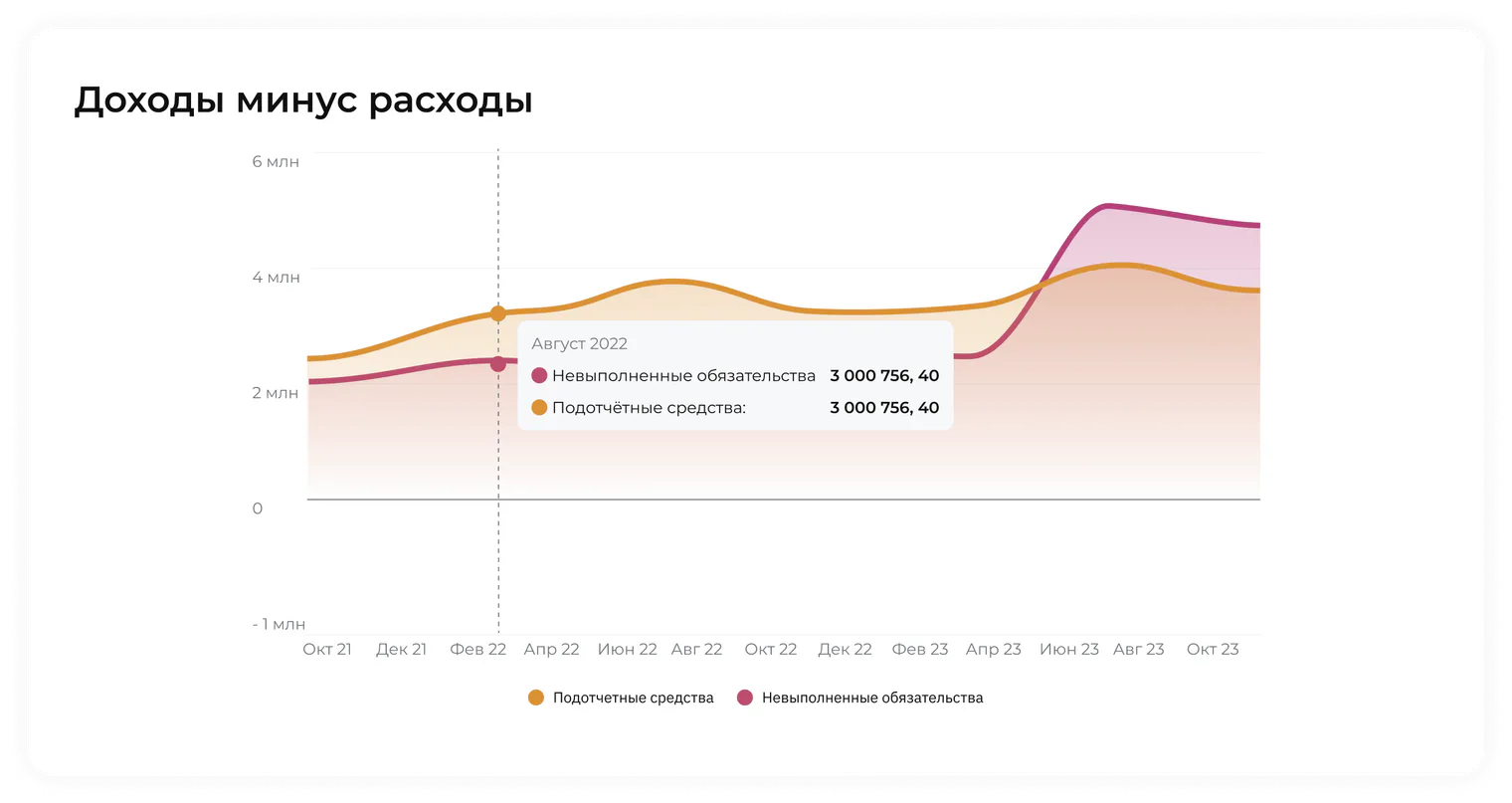
Key management accounting documents include a cash flow statement, a detailed project balance report, expense breakdowns by category, and a management balance sheet of assets and liabilities. Charts based on these documents help track the effectiveness of particular actions.
Principles of management accounting
Let us discuss several basic rules that underpin accounting in the 101 App:
Regularity
Data collection and analysis should follow a regular schedule so that you can identify patterns. Monthly reports and regular project updates are useful examples: how much has been spent, how much remains and what still needs to be done with that money.
Speed
Outdated information cannot show you the company's current position. Keep the data up to date.
Completeness of information
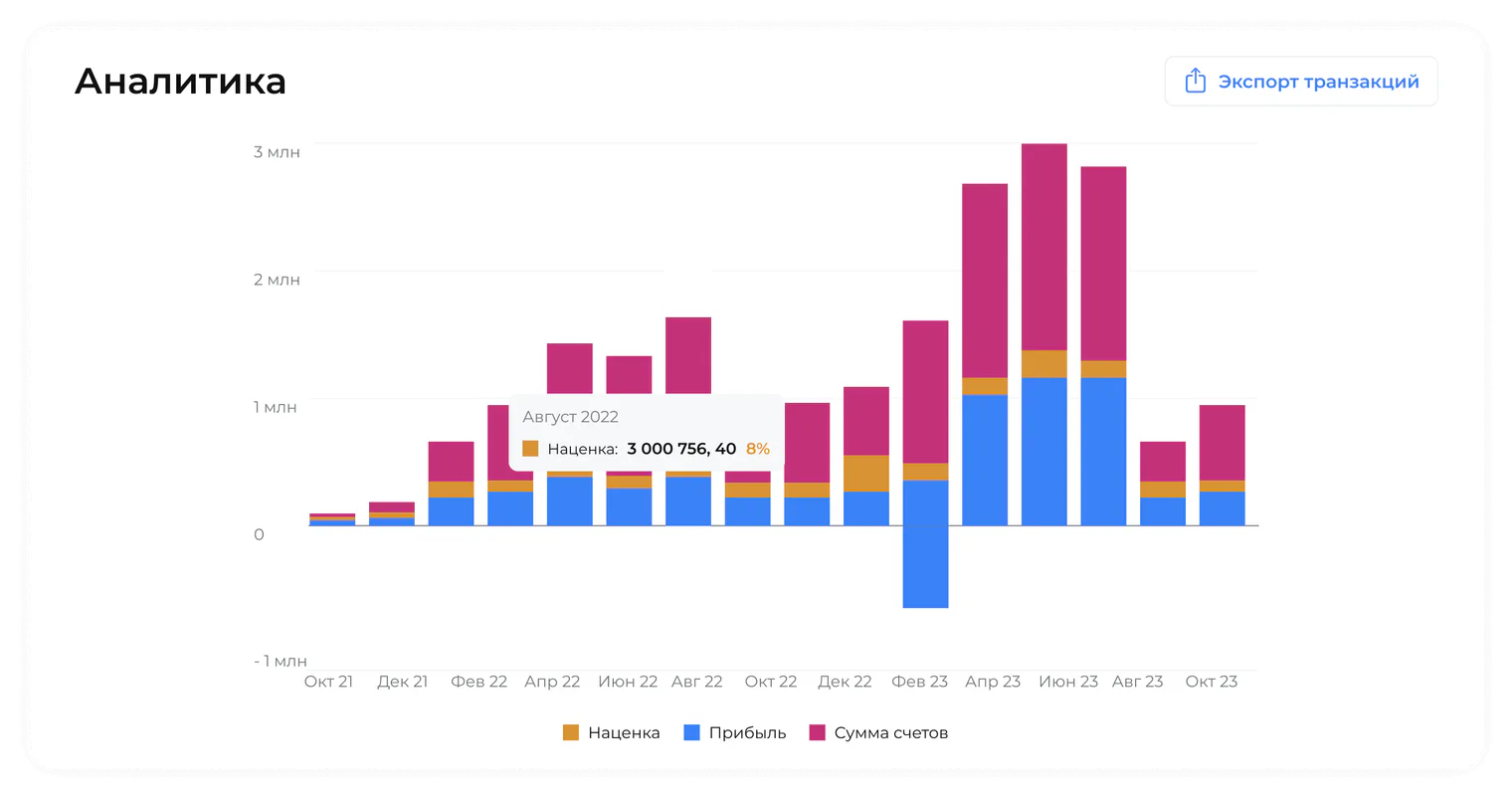
Understand your sources of revenue, such as a disclosed markup on work and other receipts. Profit is calculated after taking the related expenses into account; the amount of revenue alone does not show profit. The illustration below displays the measures “Markup,” “Profit” and “Invoice amount.” They have different meanings, and this screenshot cannot establish the amount of net profit.
Confidentiality
Information about company revenue may be commercially sensitive. Give access only to participants who need it for their work, taking their roles and authority into account.
Clarity
Complex formulas and concepts understood only by finance directors can confuse business owners. Use clear charts and reports so that participants can apply them in their daily work.
Convenience
To keep information current and reports accurate, everyone involved in a transaction needs a convenient way to enter data into the system. The 101 App works on smartphones and computers. On a smartphone, you can scan supported receipts using a QR code, report completed work and attach supporting materials. In Russia, retrieval of the item list depends on external data from the Federal Tax Service. If the receipt is not recognized, enter the details manually and attach a photo of the receipt.
How do you organize management accounting in a construction company?
A common situation in finishing or construction businesses is chaotic recordkeeping alongside equally chaotic management. Everything is “based on trust” or “we know each other; we will settle up later,” with a pile of receipts and overdue reports you feel embarrassed to show a client. Companies can face this situation when participants use different rules to record expenses and work results.
You can organize company management differently. Start with accurate financial records, a sound analysis of what is happening and a convenient tool that everyone involved in construction or renovation can use comfortably.
Download the 101 App to introduce management accounting in your company and understand where your business's money goes and how to increase it:
- Enter work and expense information from your smartphone and check the saved events.
- Scan supported receipts using a QR code; if the data do not load, fill in the report manually.
- Analyze important measures using the extended analytics available with PRO+ (guide in Russian).
- Record money allocated to the company in the Company Fund (guide in Russian) and reconcile allocations with actual transfers.
- Give the client access to the project information and supporting materials they need (guide in Russian) within the limits of their permissions.