

Builders’ Day in Russia is celebrated every year, but its date moves. The holiday can fall during the August holiday season or at the busiest stage of project handovers, so people often remember it at the last minute.
Contents:
- When is Builders’ Day in Russia, and how can you find the date quickly?
- The history of Builders’ Day: why was the holiday introduced in the USSR?
- Who celebrates Builders’ Day? A guide to the professions
- How Builders’ Day is celebrated: traditions and practical formats
- What to do on Builders’ Day: ideas for the team and its manager
- What to give for Builders’ Day: practical options
- How can you prepare for the holiday without stopping work on sites?
- Short greetings for colleagues, skilled workers and clients
- Frequently asked questions about Builders’ Day
When is Builders’ Day celebrated in Russia?
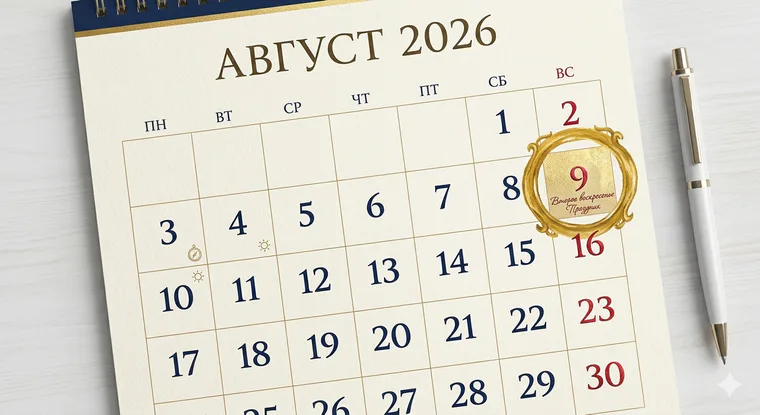
Builders’ Day in Russia is celebrated on the second Sunday in August. There is no fixed day of the month, so the calendar date changes each year. In 2026, the second Sunday in August falls on 9 August 2026.
A quick way to check the date without a search engine: open the August calendar, find the first Sunday and add 7 days. That is the date of Builders’ Day in Russia.
The history of Builders’ Day: why was the holiday introduced in the USSR?
Builders’ Day is a professional holiday with Soviet roots. It was established in the mid-1950s, during a period of reconstruction and major building projects.
The holiday was formally established by a decree of the Presidium of the Supreme Soviet of the USSR dated 6 September 1955 (in Russian). The first celebration took place in 1956 (in Russian).
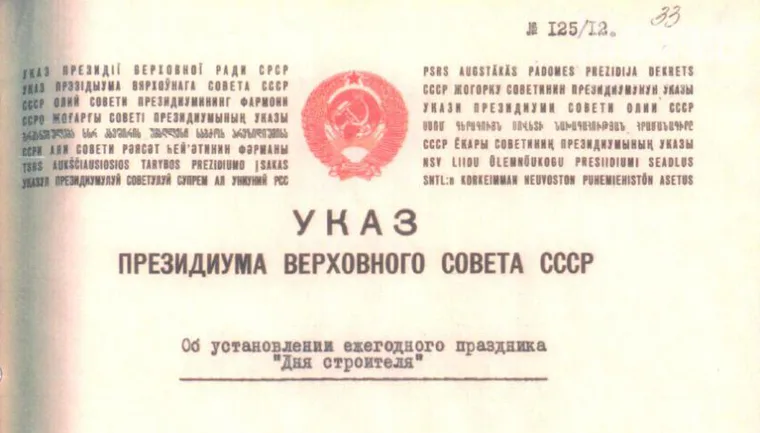
The second Sunday in August is explicitly specified in the 1955 document. The holiday honours the people responsible for construction results: those who carry out the work, make decisions, organise the process and take responsibility.
Who celebrates Builders’ Day?
There is no strict occupational entry requirement for Builders’ Day. In practice, it is about the people who turn a project into reality and deliver it on time and to the required standard.
People usually congratulate:
- skilled tradespeople: bricklayers, concrete workers, reinforcement workers, roofers, plasterers, painters, tilers and installers;
- foremen, site supervisors, site managers and project managers;
- engineering and technical staff: production and technical office engineers, estimators, procurement staff, technical supervisors, occupational health and safety staff, and surveyors;
- architects, structural engineers, designers, interior designers and specialists who select and source fit-out items;
- specialist vehicle drivers, crane operators, equipment operators, logistics staff and dispatchers;
- office teams whose work keeps the site running: accounting, legal, human resources, customer service and sales.
The criterion is simple: if someone contributes to schedules, money, quality and work safety, they deserve to be included in the congratulations.
How is Builders’ Day celebrated?
Traditional options include awards, expressions of thanks, a company party and site visits. In reality, some team members are travelling, some are in the office and some are carrying out inspections or handovers. Choose a format that fits the team’s actual schedule.
Practical formats that often work well in construction companies:
- a short awards ceremony at the end of the week, with clear categories and specific achievements;
- a travelling day of thanks: the manager visits key sites with gifts and food;
- an evening without long speeches: a 2–3-hour dinner, photos of the season’s projects and a few brief toasts;
- a family event: a picnic, a sporting activity and a children’s area.
A small company can also keep things simple: meet in the morning, exchange greetings, hand out gifts and leave for the sites. It still counts as a celebration, with less organising.
For ideas for construction-themed activities, games and competitions, see: ideas for Builders’ Day.
What can the company manager do?
The manager can:
- give a short review of the season’s projects: what was completed, where deadlines were met and how the team got through a difficult stage;
- publicly thank the less visible teams: procurement, the production and technical office, accounting and service staff;
- give key skilled workers and foremen personal thank-you notes, signed and accompanied by a short, sincere message;
- offer a clear bonus that fits existing arrangements: a day off agreed around the schedule, paid training or a wellness voucher.
What the team can do for each other: create a wall of thanks, put together a shared photo collection of the season’s work, and send short messages to colleagues who are on site and could not attend.
To strengthen non-financial motivation, you can explore the approaches in the industry motivation article: an employee motivation system for a construction company (in Russian).
What can you give for Builders’ Day?
It is easy to choose the wrong gift. Skilled workers often already have tools that suit them; foremen have their own habits; designers have their own equipment and software. Choose a gift around the need it addresses: safety, comfort, development or time.
Ideas that can be useful:
- good gloves, safety glasses, a head torch, an insulated bag for food on site, a quality raincoat or an organiser for consumables.
- a travel mug, a backpack for trips, a massage voucher or a hand-care set.
- access to training, a professional book or a subscription to a service that saves time on calculations and reporting.
- a shared gift for the site cabin or office, such as a coffee machine, a decent kettle or a set of crockery, if you know it is needed.
Another category is a gift that reduces routine work. A subscription to an accounting and costing service can help here: the blog explains how to calculate an estimate directly from a phone and keep project data in one place, in its article about the 101 App for estimating.
To expand your list of ideas, see the article: what to give a construction worker. (in Russian)
How can you prepare for the holiday without stopping work on sites?
A common mistake is to organise Builders’ Day as if it were separate from day-to-day work. It will still have to fit around deadlines, deliveries and handovers. Keep the plan short and practical.
- Step 1. Choose a format that fits the actual schedule. If teams are travelling between sites, organise a day of visits and greetings or several smaller meetings.
- Step 2. Set the budget. Put money aside for gifts and the company party in advance, so you do not have to take it from the cash balance on the last day.
- Step 3. Make a list of people. Divide it into groups: skilled workers and foremen, office staff, partners and key clients. Each group should have its own gift and message.
- Step 4. Prepare the greetings. Keep them short and specific: the project, the stage and the person’s contribution.
- Step 5. Check the risks. If the meeting is after the working week, deal with critical tasks beforehand: purchasing, access permissions, site visits and shift handovers.
Simple financial discipline helps with the budget: set up a separate fund for non-financial motivation and celebrations. The approach is explained in the article on a system of funds for a business (in Russian).
Another preparation task is tracking money advanced to staff for expenses. If spending on gifts, food and transport is scattered across different cards and chats, it can be difficult to bring it into one report after the holiday. Agree in advance who will record the expenses and collect supporting documents. For more on this, see the article on accountable funds (in Russian).
To discuss how to organise preparation and expense tracking, you can book a short presentation of workflows in the 101 App.
Short greetings
A greeting does not have to be long. It should relate to the person’s actual work. One fact about the season and one expression of thanks work better than a standard list of good wishes.
For an office colleague: “Happy Builders’ Day! Thank you for keeping our processes and people organised. Without that, projects would not be handed over.”
For a skilled worker on site: “Happy Builders’ Day! Thank you for the quality and pace of your work. I especially appreciate that you keep your word on deadlines and do not leave the small details for later.”
For a foreman: “Happy Builders’ Day! Thank you for taking responsibility and looking after the team. May the season end calmly, without last-minute rushes.”
For a client, if you are the contractor: “Today is Builders’ Day. Thank you for your trust and clear agreements. We are continuing the work to plan and maintaining quality and reporting.”
Frequently asked questions about Builders’ Day
Is Builders’ Day a day off? The Russian holiday falls on a Sunday. Whether that is a working day for a particular team depends on its schedule. Some celebrate on Sunday; others move the greetings to Friday.
Can you congratulate a designer or architect? Yes, if they contribute to the results on your site. In construction, design and building work are more closely connected than people sometimes assume.
What can you give someone you do not know closely? Versatile options include a good insulated flask, gloves, a torch, a wellness voucher, a professional book or access to a useful service. Give tools only if you know the person’s preferences.
What if the holiday coincides with a stage handover? Keep the celebration brief and practical: a morning greeting, a gift handed over in person and a short awards ceremony. Move the larger meeting to the next quieter date to avoid adding pressure to the schedule.