
Contents:
Why does a renovation company need a website?
Before building a website, decide what it should do: help a potential customer assess your work, understand your terms and contact you. Write down the information a visitor should find and the action they can take afterwards. Starting with that question helps you spend time and money on something useful to customers.
You may want more leads (see the 101 article on renovation leads, in Russian), a stronger reputation and a place to explain your company. A visitor has a more immediate task: learn who you are, see relevant projects and decide whether your prices and way of working fit their plans.
Learn who you are. Someone may have received your contact from a friend. The website is then their first detailed introduction to the company. Show what you do, where you work, how to get in touch and examples of completed projects.
Understand your price range. A visitor wants to know which segment you serve. A fixed “from” price is not always useful because scope varies. The projects you show, their scope and transparent cost examples convey more than an unexplained number. The Russian source used 25,000 rubles per square metre as an illustrative local price, not a universal benchmark.
See completed work. Photographs help, but a collection of attractive images alone gives little basis for comparison. Show a range of relevant cases and explain the area, work performed, time and costs where you can share them accurately.
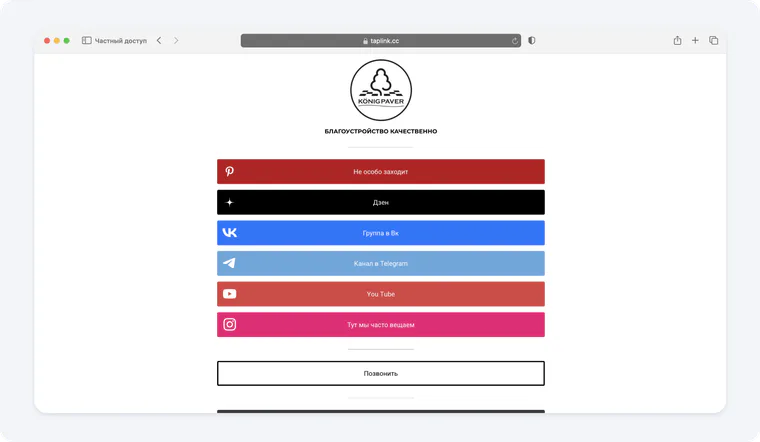
At first, a website can act as a clear business card. If a full website is premature, a compact page that collects your contact details, social profiles and important links may suffice. Taplink is one example mentioned in the Russian source. Later you can decide whether a larger website is worth the investment.
Common mistakes on construction and renovation websites
The following examples show ways a website can make the customer's first decision harder.
Trying to close a major sale immediately. A renovation is a large commitment. Offer a smaller first step, such as requesting an estimate, arranging a visit or reading detailed cases with costs. This gives the visitor a practical way to contact you and lets you learn what they need.
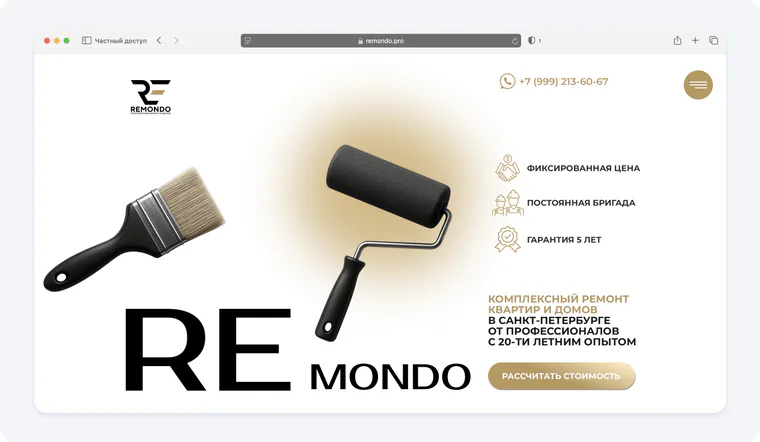
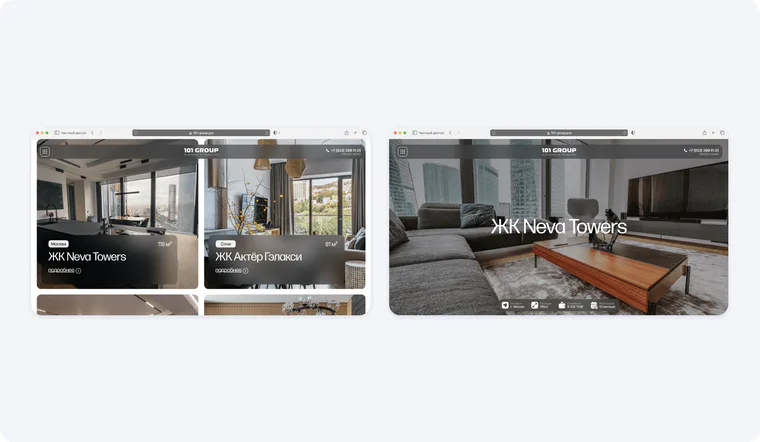
Cases without context. The example site presented photographs from several projects, but did not explain the building, area, duration or the cost of work and materials. A visitor cannot tell whether those projects resemble their own. Add informative captions and distinguish labour, materials and finishes when that breakdown is available.
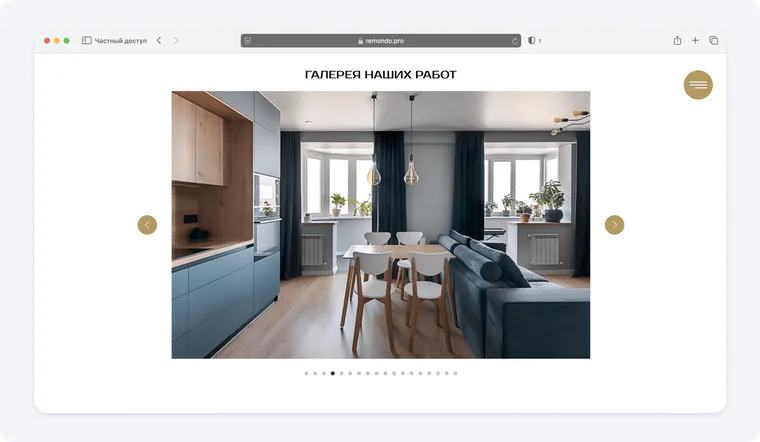
A case page can pair large photographs with a clear account of the scope, price and schedule. Measure whether that presentation improves enquiries on your own site; a picture alone does not prove a conversion gain.
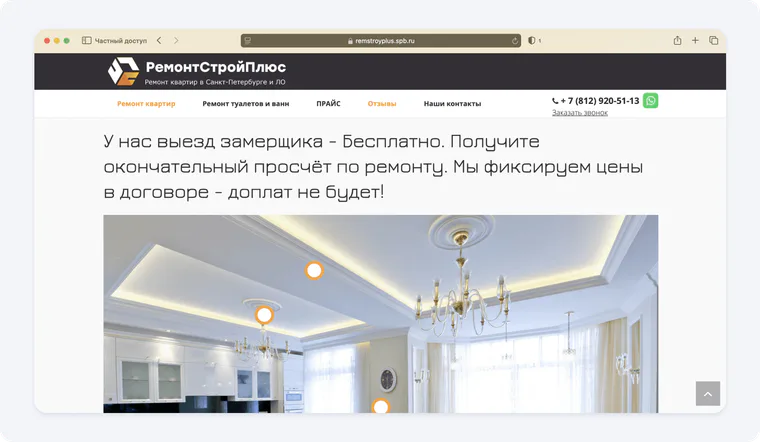
Distracting design. You do not need an elaborate visual concept to make information readable. A simple template can work. Use a consistent font system and restrained emphasis; excessive fonts or italics can distract from the work and terms you want visitors to understand. Tilda is one template service cited by the Russian article, not a required platform.
What should you put on the site to help customers decide?
Explain how you carry out and control a project. The Russian article uses a historical example from a company that works with 101 (Russian site). The following screenshots show Russian language pages and search results; they are examples, not evidence of current rankings.
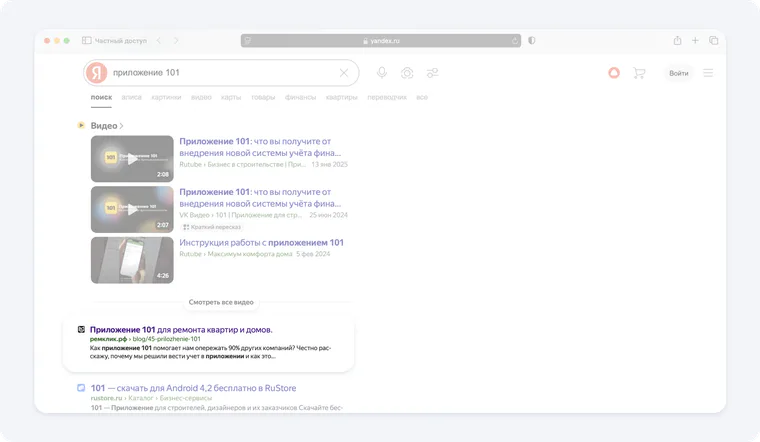
RemKlik published an article in Russian about its work with 101. It described how the team organised projects and communicated with customers. The original claim about search traffic or more leads cannot be established from a single screenshot, so assess such a page by the questions it answers and the enquiries it produces.
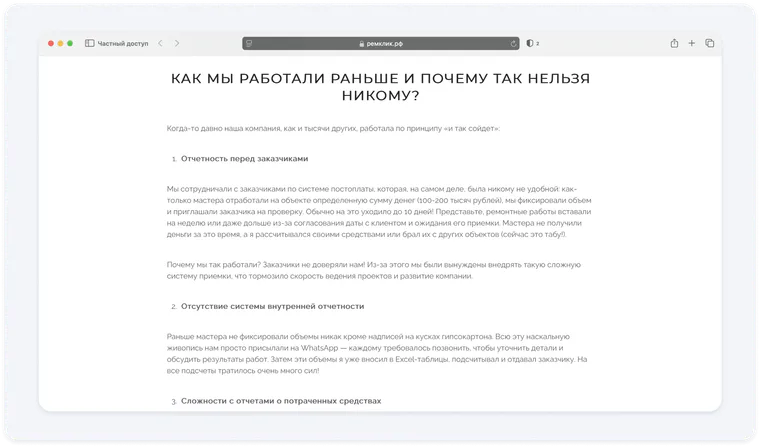
If you use 101 (Russian site), a page about your process can explain three things: how work is organised, what project information the customer can see and how decisions are agreed. Back those descriptions with real project examples. Do not promise a traffic increase without measurement.
- A separate page can explain your working process in plain terms.
- Customers can learn what information they receive about the project and how they approve decisions.
- Cases can show what that transparent process looked like in practice.
Write honestly about your own experience. Someone comparing contractors may find the story useful, but no article guarantees their choice. If you want help with a page about 101, ask the 101 community (Russian language) about current resources. Check whether consultations or materials are available before offering them to your customers.
How else can you promote the website?
Choose channels that your target customers use, then compare the cost and quality of enquiries. The Russian article discusses three starting points; its related guide to renovation leads is in Russian.
1. Put the website where people already find you
Add a clear link to company and staff profiles where appropriate, social posts, video descriptions and printed business cards. A QR code can help with print. Check that each link leads to the right page and that visitors can quickly find contact details. You do not need to place it indiscriminately in every message.
2. Make the site useful and understandable for search
Give each page a descriptive title, write helpful original information about the work you actually do and check appropriate structured markup and page-loading speed, and make pages easy to read and use. Google Search Essentials recommends content made for people and words customers would use in prominent page elements. Search rankings are not guaranteed.
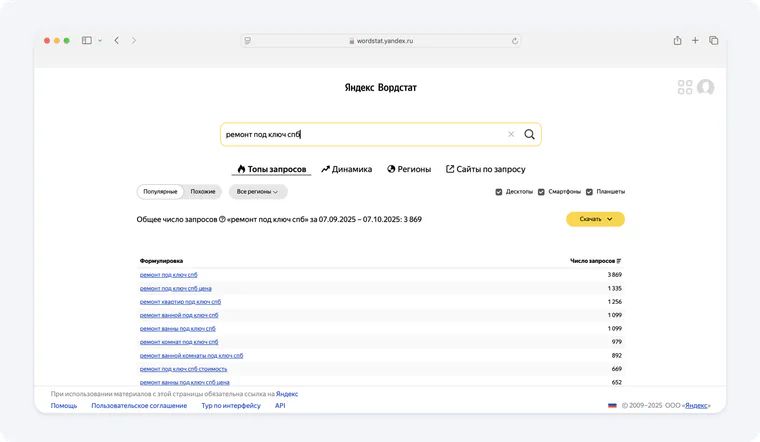
Research questions people ask in your market, such as how a particular renovation method works. Wordstat is a Russian market example of a query research service; use a suitable tool for your region. Compare demand and competing pages, publish a genuinely useful answer, then measure visits and enquiries.
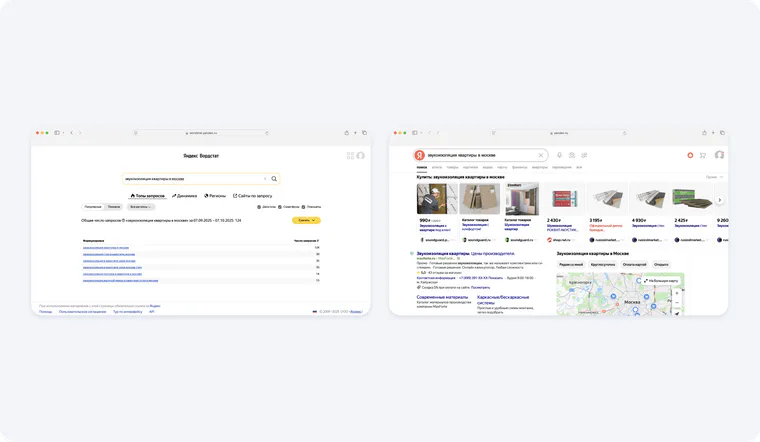
3. Test paid promotion
Choose an advertising system available in your market and study relevant local queries. Yandex Direct and Wordstat are Russian market examples from the source article. Start with a controlled budget and compare the cost of each qualified enquiry with the work it brings. Review the terms of each service before spending.