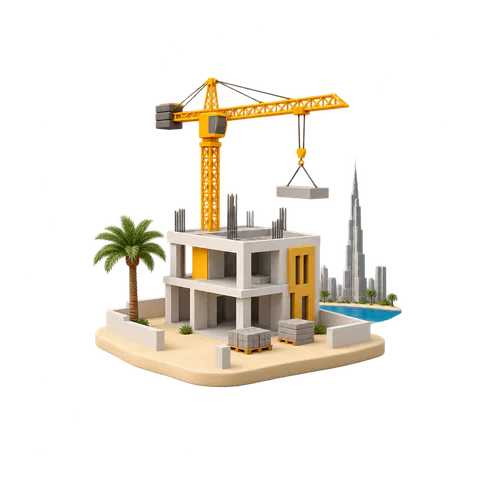

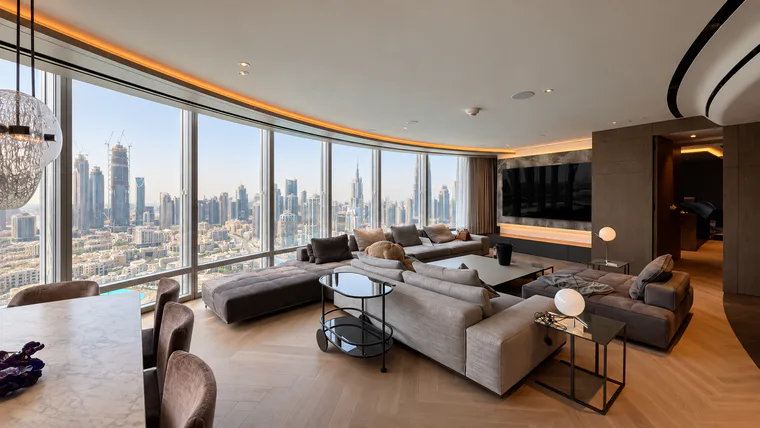
In Dubai, it is easy to encounter an expensive façade, panoramic windows and a striking rendering. It is much harder to encounter a team that can bring the real property to that same standard. In fit-outs, the cost of a mistake is visible in a wall line, a material joint, the way light reveals a surface and the client’s reaction when they come to accept the work.
KVYS grew precisely out of that gap. Founded in 2023 as a fit-out team, the company now operates as a full-cycle construction business, takes on buildings of up to 12 storeys and brings together more than 200 specialists. This growth did not happen by itself: it was made possible by a high quality standard, staff training and one shared way of working in the 101 app.
Contents:
- A modern city does not guarantee quality
- How KVYS started
- Building its own school of quality
- How 101 turned a founder’s standard into a system
- One team from different countries
- Why this matters to a demanding client
- From fit-outs to the full cycle
- Where to start systematizing your business
- Documents and AI in project management
A modern city does not guarantee quality
Dubai is a city of ultra-modern architecture. Yet the city’s modernity does not automatically make every construction process modern. In the KVYS team’s experience, clients in the fit-out segment regularly encounter uneven surfaces, poorly fitted materials and unfinished work that people try to dismiss with the phrase, “you cannot see it from a distance.”
For part of the market, this may seem like an acceptable compromise. It is not for clients accustomed to the exacting acceptance culture of Russia and other CIS countries. They look closely at geometry, the quality of joints and the way light plays across a surface. They need a result whose planes look almost factory-precise, not a property they are expected to “accept and forget.”
This is the point at which the KVYS story begins. The company did not merely promise a premium result. It chose to build a process in which quality can be reproduced on the next property, by the next crew and at the next stage of growth.
How KVYS started
KVYS began as a fit-out company in 2023. At that stage, every decision is close to the founder: they can visit the property personally, spot a crooked corner, give a craftsman feedback and agree matters with the client directly. But this model has a trap: quality depends on one person’s memory and presence.
As the workload grew, the question changed: “Who will do this work the way we believe it should be done?” People can be found in the market. It is harder to find people for whom a neat seam, precise geometry, a clean handover and the willingness not to hide a problem until the last day are equally important.
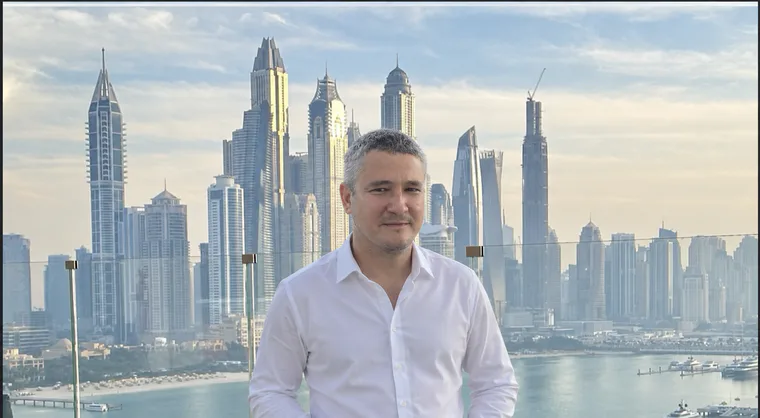
Rather than relying on luck, KVYS began to build its own work culture. Vadim Knyazev and the team formalized the high bar they brought to the market: to hand over a space they can be proud of in front of even the most exacting client.
Do not look for perfect craftspeople — build your own school of quality
In its first years, the team ran into a very practical problem: you cannot take a random crew, give it an expensive interior and expect an excellent result. Craftspeople have different experience, habits and ideas about what is acceptable. Where one person sees a completed stage, another sees work that must be redone.
That is why KVYS did not reduce the challenge to hiring. The team had to train people, show them the reference result, explain the logic of the requirements and check the outcome again. The company brought into its process a strict quality culture familiar to many clients from CIS countries: a surface must be level, a line clean, a joint precise, and a disputed area corrected before final acceptance.
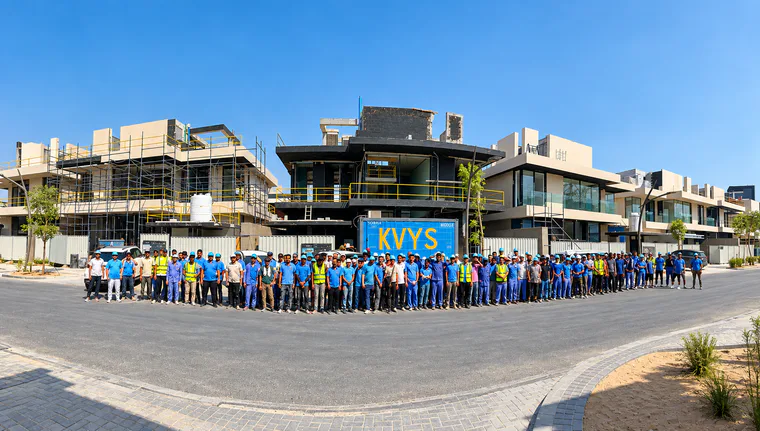
Importantly, this is not a story about specialists from one country being better than specialists from another. It is about a standard that is taught and verified. The KVYS team includes people from India, Pakistan, Russia, Ukraine, the Philippines and Syria. They are united by clear rules: what counts as the standard, how a result is recorded and who is responsible for the next step.
Quality therefore stops being a manager’s personal taste. It becomes the company’s operating discipline.
How 101 turned the founder’s standard into a system
The most dangerous moment of growth arrives when there are more properties and employees than a founder can hold in their head. If rules live only in conversations, chats and personal spreadsheets, the company starts to lose momentum: someone misses an observation, someone uses an old estimate, someone does not get access to a document, while the client is waiting for an answer from a person who is at another property.
101 helped KVYS bring its operating environment together in one place. A project becomes more than a folder of files: it is an environment where participants, events, documents, estimates, expenses, reports and decision history are visible. A manager sees the whole picture. A team member understands their area of responsibility. A client gets a transparent language of facts instead of the vague “everything is under control.”
The role model is particularly important here. A site manager needs information about their own property, not the company’s entire economics. A supplier does not need access to internal discussions with the client. A client needs to see their project, not anyone else’s data. In 101, access is granted in the context of a specific project; team-member access settings explains how this principle works in practice.
Excel remains useful for calculations and one-off exports. Excel does not itself create a multi-user system with roles, action history, targeted access and one shared accountability environment. A spreadsheet stores cells. 101 helps store the process.
| Situation | Chaotic environment | KVYS environment in 101 |
|---|---|---|
| Quality issue | Remains in a private chat or voice message | Recorded in the context of the project and the responsible person |
| Employee change | History has to be assembled manually | A new participant receives structured context |
| Client request | Information is searched for across correspondence | Events, reports, documents and project photos are shown |
| Stage acceptance | The fact depends on participants’ memory | There is a supporting document and visual record |
A Gantt chart connects stages, deadlines and responsible people in one plan, so the team sees a shift before it becomes a cascading failure on site.
For KVYS, planning with a Gantt chart is a way to understand in advance what must be done and when: which stage must be brought to site, when material should be ordered, whom to involve and which payment will be required. When deadlines and dependencies are assembled in one plan, the company manages risks before delays affect the property. This is how the schedule becomes the basis for sound cash-flow management: money, people and supplies are tied to the actual work plan, not to guesses in correspondence.
A photo report is not decoration for a story. In construction, it is evidence of a fact and a way to speak the same language as the client. In 101, visual documentation of a project is covered in the guide to project files and photos.
One team from different countries
An international team is one of Dubai’s strengths and, at the same time, a management challenge. The same task cannot be left as a short verbal agreement: different languages, experience and work habits can too easily turn “understood” into different results on site.
101 helps remove some of this noise through its localized interface. The app is available in Russian, English, Spanish, Uzbek, Georgian, Indonesian, Hindi and Arabic. For KVYS, this means a substantial part of the team can work in a familiar language environment while the project keeps one shared structure, regardless of the language of a particular user.
No localization replaces clear rules. For workers whose interface language is not in the available set, KVYS sets a shared project language, uses visual templates and teaches standards through practice. The point of localization is that every participant understands the expected result in the same way.
Why this matters to a demanding client
A premium client buys more than square metres and a beautiful interior. They buy confidence that money, deadlines and quality will not dissolve into chaos. For a client accustomed to accepting a property carefully, the result and the process are inseparable.
That is why 101 became an additional argument for trust for KVYS. The company can show not only a finished living room or a level surface, but a mature way of managing work: who is responsible for the project, which events have taken place, how expenses are recorded, where documents are kept and what confirms a completed stage. The option to monitor the movement of funds is described in accounting for work, materials and money through events.
This is particularly valuable to modern affluent clients who expect digital service alongside high-quality construction. Transparency does not replace personal communication, but it frees the client from being a dispatcher who has to search for news about their property on their own.
Documents for the local market and AI integrations
A full-cycle company cannot exist on words and photographs alone. It needs estimates, certificates, reports, appendices and clear confirmation of completed work. 101 provides a branded-document environment: a company can prepare its own templates and use them in its operational process. Learn more in the documents section.
For each country, legal wording, taxes and mandatory details must be checked with a local lawyer or accountant. But once verified, the company can formalize the agreed document standard in the system so that it does not have to assemble it from scratch for every project.
101 includes an AI assistant and integrations. This opens the way to useful AI work: drafting a report from structured data, collecting unresolved project questions or helping an employee find the relevant procedure faster. AI should not invent facts and does not replace a manager. Its strength is accelerating routine work when the facts have already been collected in the system.
From fit-outs to the full cycle
KVYS grew from a fit-out company into a full-cycle contractor not because it one day decided to take on larger properties. First, it learned to reproduce a high standard: bring people together, train them, control stages, record facts and show the client a clear picture.
Today, the company can work on homes of up to 12 storeys. This is the next scale and the next level of responsibility: more participants, more documents and a higher cost for every mistake. But the core logic remains the same: people create quality, and the system helps prevent it from being lost as the company grows.
Where to start systematizing your business
You do not need to digitize the entire business in one evening. A strong start is to choose one live property and make it the reference: assign roles, invite participants, create expense items, record key events, attach photos and issue documents in one consistent order.
- Choose a current project where the cost of a mistake is already tangible.
- Define the roles: manager, site manager, procurement, contractors and client.
- Agree which facts must go into 101 instead of remaining in chat.
- Set the rules for photo reports, acceptance and documents.
- After several weeks, find the points where the team has slipped back into chaos — that is the next area to configure.
You can start with one live property: create a project, assign roles, build a Gantt plan and keep files and photos where the team makes decisions.
The KVYS case shows one simple thing: scale does not begin with the number of people. It begins when people have a shared, clear and verifiable way to work together. If your company has outgrown Excel but has not yet gained an operating system, start with one project in 101.
Let it be the property where you stop asking, “Who has the latest version?” and start seeing the real picture of the work.