

Contents:
What is a technical director?
A technical director is a senior manager in a renovation company. The role calls for someone who gets things done, communicates effectively and takes responsibility. They keep the delivery and day-to-day operational side of the company's projects running.
In the management model described here, the technical director is a central figure: someone who takes initiative and follows through. Their work helps the company develop by keeping people, technical decisions and project delivery coordinated.
When a company is starting out, its owner often performs these duties personally: marketing, recruiting, supervising site managers and dealing with technical questions. As the number of projects increases, that combination becomes harder to manage. Appointing a technical director can give this work a dedicated owner.
A 101 user discusses organizing and growing his business in our interview with Vladimir Berman (in Russian). It offers related experience from running a regional branch.
The technical director's area of responsibility
In the author's proposed approach, the team discusses and collectively approves the candidate, including through a vote. The aim is to choose someone responsible, willing to tackle difficulties and capable of thinking beyond familiar solutions. This is a suggested hiring approach for a company, rather than a universal appointment requirement.
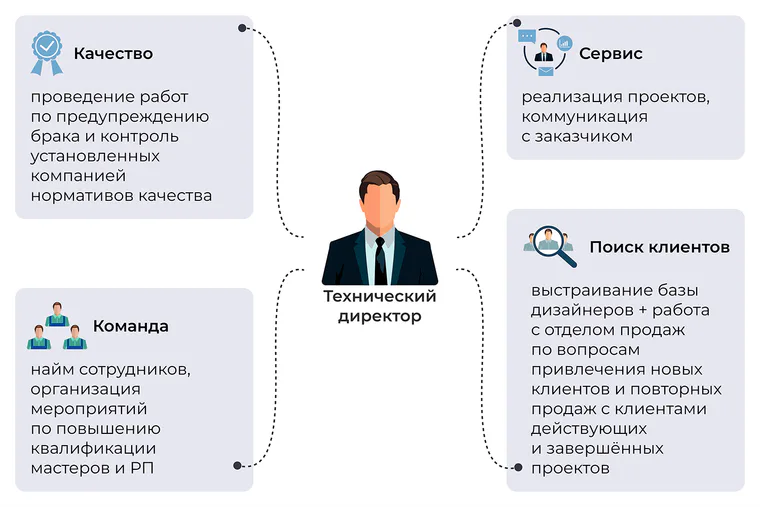
A technical director has many procedures to follow. Those procedures also leave room for judgment and initiative within clearly defined responsibilities. The person in the role needs to use that freedom in the company's interests.
The technical director's tasks
The technical director's responsibilities are broader than those of a site manager or project manager. In this company model, project managers focus on delivering their assigned projects, while the technical director coordinates issues that span teams, clients and the wider business. The main tasks are:
Communicate with clients to identify problem areas, resolve disputes and agree on corrective action. Project managers also speak with clients, but strategic discussions and escalated problems fall within the technical director's remit.
Work with the regional manager or company head on the following matters:
- Approving the price list and ensuring that it is used.
- Sharing client referrals.
- Sharing contacts and referrals for designers and architects.
- Approving new people for roles.
- Developing marketing decisions and strategies.
Allocate workloads to project managers or site managers. The technical director needs to understand employees' capabilities and set realistic tasks.
Communicate with the people who design the projects and build lasting relationships with designers. A strong network of designers can become an important foundation for promoting the company.
Work with the sales department.
Work with construction quality control specialists to find new technical solutions and improve those already used on projects.
Work with the operations director on:
- Quality control.
- Recruitment.
- Reporting in 101, including reviewing and approving invoices under the permissions assigned by the company.
Ensure that project planning, recordkeeping and client reporting are in place, and that reports are prepared and sent to clients on time through the 101 app.
Monitor project balances. The technical director should act early to prevent situations in which a project's available balance approaches zero.
Give clients their initial introduction to using the 101 app.
Monitor compliance with project deadlines.
Check that project managers use the company's equipment and tools correctly and follow their repair schedules.
Coordinate project managers and trainees, with attention to team cohesion, mentoring and development. Team-building, management and conflict-resolution skills are important in this role.
Recruit project managers and tradespeople for projects. The technical director needs to understand which people are required, define expectations clearly, assess candidates and make firm hiring decisions.
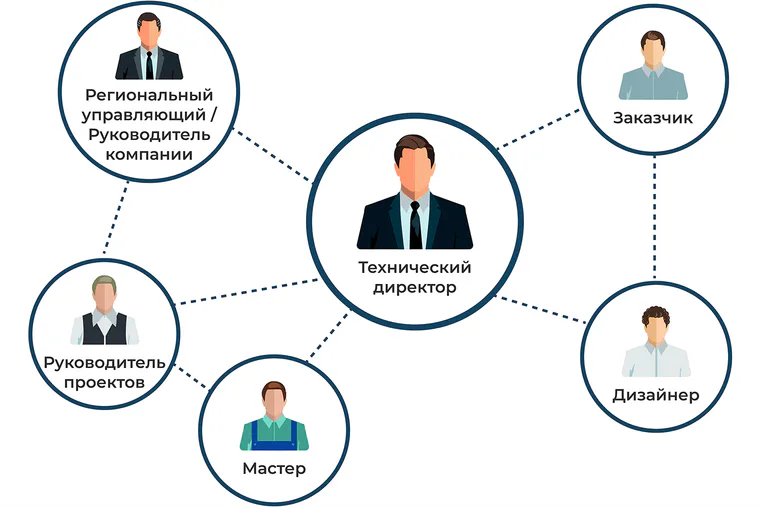
The list is extensive because the technical director communicates with almost everyone involved in a renovation.
Monitor compliance with applicable occupational health and safety requirements, workplace discipline and the company's internal rules.
Organize professional development for tradespeople and project managers.
Who is suited to the technical director role?
This is a demanding position that requires commitment, a systematic approach and the willingness to organize an entire team's work. Knowledge of construction and interior fit-out needs to be combined with leadership and management skills. Understanding people and anticipating emerging problems also matter.
Potential advantages of the role
Depending on the company's arrangements, the position can offer:
- Freedom to organize your own schedule.
- The potential for a high salary.
- Space for creative thinking.
- Opportunities for professional growth: as senior managers develop, they can help the company develop too.
Challenges to consider
- A substantial workload. Even when you decide how to organize your time, there is a great deal to do.
- A high level of responsibility and personal commitment.
This role requires more than following instructions or passing responsibility to others. It suits people who are prepared to contribute their effort and judgment as well as benefit from the opportunities the position offers.