
Contents:
What is a sales funnel?
A sales funnel is a diagram of the stages in a client's interaction with a company, from the first contact, such as a message in a messenger or a visit to your website through an ad, to closing a deal.
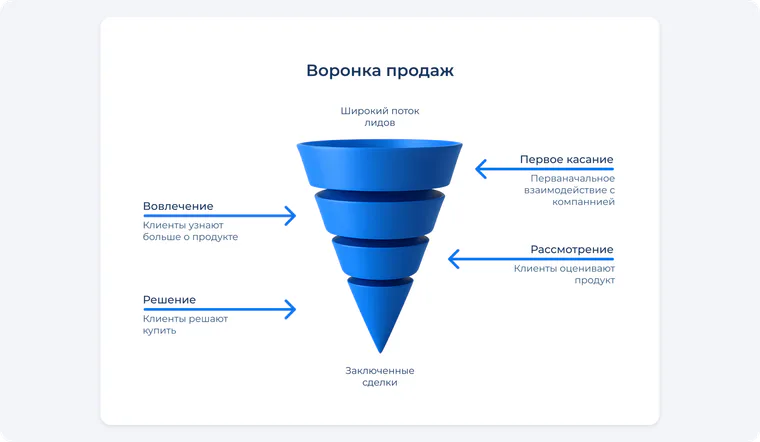
Visualization of a construction sales funnel. The diagram labels are in Russian.
Why is this client journey called a funnel? Because some people leave before reaching the end. As the diagram above shows, the funnel narrows towards the bottom.
A broad stream of leads enters the top of the funnel, and actual deals remain at the bottom. Every industry has its own characteristics. In construction, the client journey may include additional steps, such as a site meeting and a discussion of the estimate. Conversion depends on your segment, lead sources and team performance; check it against your own data.
Why do you need a sales funnel in construction?
Let's look at why you might map and visualize these stages and build a funnel specifically for your business:
Find the bottlenecks where clients leave. Understanding how clients reach you and when they drop out helps you examine and improve their journey. For example, if clients often disappear after you send an estimate, you could change your approach and prepare the commercial proposal after an in-person site meeting, giving you a better chance to explain the value you offer.
Track conversion at each stage. Diagrams and calculations help you measure conversion and forecast revenue at the beginning of the month. For example, if you know that you need to handle 60 enquiries to sign 5 contracts, you can assess your capacity realistically, hire a specialist or decide to lower your target.
Redesign your sales process. You can model a sales funnel and shape the client's journey from the first contact to signing the contract. Your experience with clients and your understanding of the industry and marketing tools can all help.
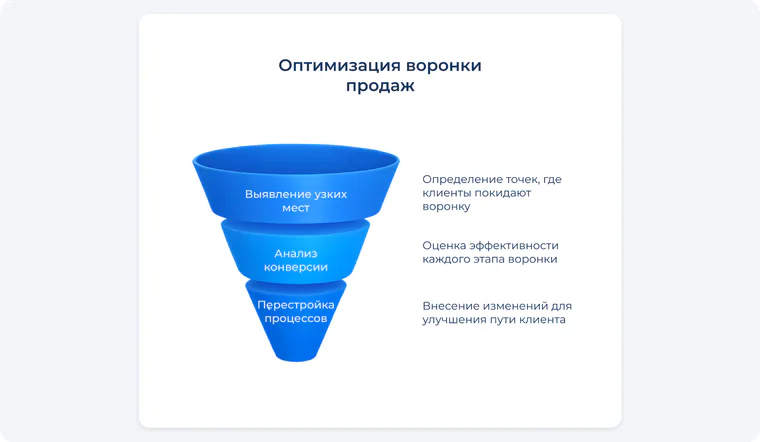
How to optimize a construction sales funnel. The diagram labels are in Russian.
An example of a construction sales funnel
Every funnel has stages. Here is an example you can use as a starting point for your own:
1. Attract attention
At this stage, your main goal is to tell potential clients about your company. If they have a problem you can solve, they should be able to find you through advertising, recommendations from other professionals or an online search.
Keep the risks in mind. You can spend a lot on promotion and get no results. In effect, a hole opens up between the first stage of the funnel and the next, and leads fall through it. To reduce this risk, proceed carefully, test your approach and try different methods.
2. Make first contact
Once a prospective client knows about you, you need to obtain their contact details or encourage them to message or call you. Tools that make this first step easier include enquiry forms or renovation cost calculators on your website, a discount in exchange for contact details and an attractive offer for getting in touch promptly.
Respond promptly at this stage. If a client shows interest and messages or calls you, give them enough time and attention. Slow replies or objections left unresolved can sharply narrow the funnel.
3. Arrange a site visit
After the first contact, we suggest moving to an in-person meeting. It can serve several purposes at once: show the quality of your work and service, answer the client's questions and address their doubts.
There is a risk here: you take on a lot and ask for a substantial amount of the client's time. However, a well-run site visit can help them understand the details and see how your approach and quality differ from those of competitors.
This approach also takes considerable time from the business owner or sales manager. For budget renovations, it may be unnecessary, so you could use it only in selected cases. For an expensive renovation, such a meeting may be useful because the client needs to discuss the details and see the contractor's approach.
4. Prepare an estimate or commercial proposal
One useful rule is to send the estimate or proposal after a personal conversation, a call or online tour, or a discussion of your company's strengths. This helps the client understand the value of your calculations.
Avoid delays with your calculations at this stage: the client may be talking to several other companies at the same time. You could miss the opportunity to send your document if a faster competitor has already won them over.
The 101 app can help with calculations, analysing current figures and preparing estimates. It stores information about cash flows across your projects and lets you put together a calculation during a meeting with a prospective client. This is one way to reduce the risk of the “elevator effect” (in Russian): you fail to win the client during a tour, and they meet a more persuasive contractor in the elevator afterwards.
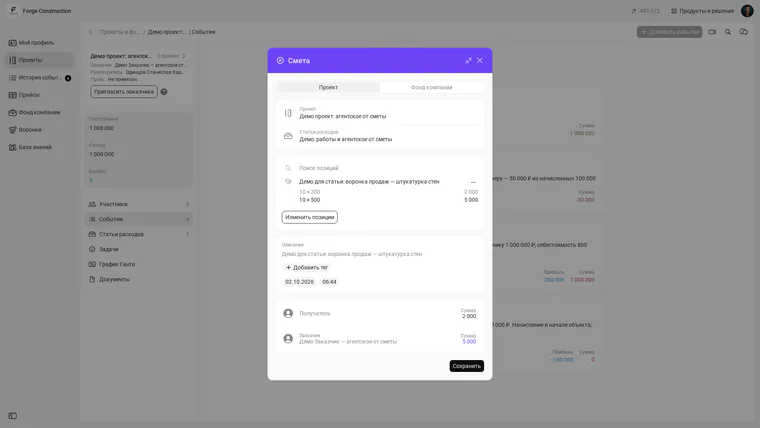
An open estimate form with a fictional line item in the Forge Construction owner's account. The calculation has not been saved. The interface is in Russian.
5. Negotiate
Now you need to guide the client towards a deal by addressing their objections. Well-designed sales scripts can help, but understanding the client's needs, offering appropriate solutions and explaining your position confidently matters even more.
For detailed advice on talking to clients, improving conversion and feeling more comfortable selling, visit the community of forward-thinking construction professionals (in Russian).

Russian-language community materials about sales. This is a historical screenshot; the content and counters may differ from the current channel.
6. Sign the contract
Record all agreements clearly. A poorly drafted construction contract that fails to protect your rights as a contractor can undermine the effort you have put in so far.
A legally sound contract, transparent payment terms recorded in it and a record of all financial transactions in the 101 app can help you sign the documents with confidence and start the work.
Whether a contract template applies depends on the law governing your transaction. Check the terms with a lawyer; the recommendations in this article do not replace that review.
7. Deliver the work and support the client
The sales process continues after the contract is signed. You need to complete the job and leave the client satisfied. Monitor quality, introduce photo reports into your workflow and offer clients appropriate guarantees.
An unhappy client is unlikely to recommend you or place another order, so it pays to work with the long term in mind.
8. Follow up after the sale
It is easy to overlook the stage after the work is finished. A satisfied client may have new projects and may recommend you to people they know. Stay in touch and give them a clear reason to return. Use a referral programme, repeat-order bonuses and ongoing maintenance services.
A diagram of all these steps might look like the funnel below.
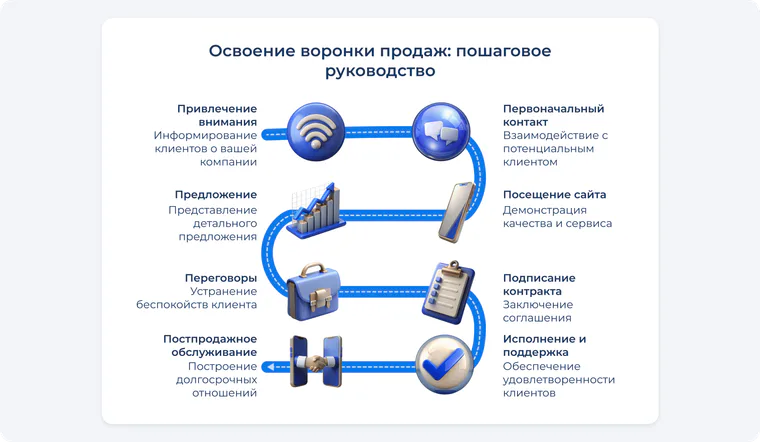
The diagram shows a general client journey, with labels in Russian. It includes a “Website visit” stage, while the example above describes a site meeting; these are different actions. The text explains eight stages for a construction company, and the diagram provides a general illustration.
How can you keep clients at every stage?
A few tips for improving conversion
- Standardize the steps. Prepare call scripts, measurement standards and site handover checklists.
- Train your employees. Negotiation skills matter for sales staff and site supervisors alike; this is a weak point for many companies trying to provide good service.
- Use analytics. Funnel charts help you spot problem areas.
Would you like to learn more about sales psychology, explore selling without an estimate or self-doubt and hear about the 101 brand's experience in construction and renovation? We recommend listening to Vadim Sorokolad's construction company reviews (in Russian).
The video is in Russian. The editorial description presents the recording as the third meeting in a management accounting course in the 101 app with a co-founder of the 101 GROUP brand. The description lists topics on running a business, preparing estimates and settling payments with contractors:
- the most effective way to sell your services;
- the problems of excessive delegation and ways to solve them;
- finding a reliable contractor or tradesperson for the long term;
- how much to pay tradespeople to keep expectations in line;
- building financial relationships with designers and agents;
- setting prices for pushy and loyal tradespeople;
- selling your services with a transparent markup;
- a story mentioned in the description about a builder with personal income of 5 000 000. The accuracy and typicality of this result are not confirmed here; it is not a forecast of your earnings.
A video about construction, relationships, sales and money