

Contents:
What is a construction schedule?
A construction schedule is a document that arranges building or renovation work into phases and assigns start and finish dates to each task. It provides an overview of the project, supports resource planning, and helps teams monitor progress at every stage.
This guide focuses on the general process of planning phases, dates, and resources, so the same method can be used in different scheduling tools.
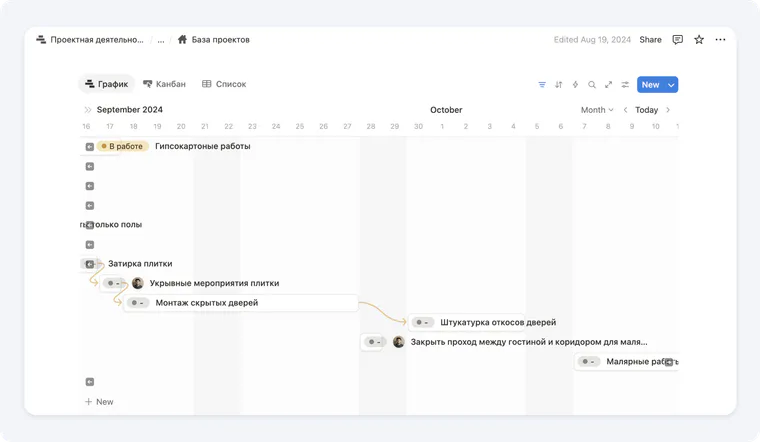
A schedule can be presented in several formats:
- tables, for example in Excel;
- Gantt charts, available in tools such as Notion or Gectaro;
- kanban boards, for example in Notion, Trello, or Jira;
- interactive calendars.
When does a site supervisor need a schedule?
Many construction and renovation businesses still manage part of their work manually. Common barriers to adopting digital tools include established habits and the effort required to bring the whole team into a new process.
Moving to a digital scheduling tool requires a few basic conditions:
- the team's willingness to record and track work consistently;
- the ability of all participants to understand the chosen tool;
- time to enter data and keep it accurate.
Maintaining tables and task statuses takes discipline, but it becomes valuable when a company plans to grow. A well-maintained interactive schedule helps the team identify and address many site issues from the office.
A construction schedule helps the site supervisor to:
- organize the construction site;
- plan crews and resources such as equipment and materials;
- agree on project dates with the client;
- measure delays or progress against the plan;
- simplify progress reporting.
Without a schedule, tasks can overlap, crews can sit idle, and materials can arrive too early or too late. With a shared plan, each participant knows what to do and when to do it.
Key principles for creating a construction schedule
Follow several practical principles to make the schedule useful as a management tool.
1. Break the work into logical phases
Divide the project into major blocks:
- preparatory work;
- earthworks;
- foundations;
- structural work;
- building services;
- finishes and other work.
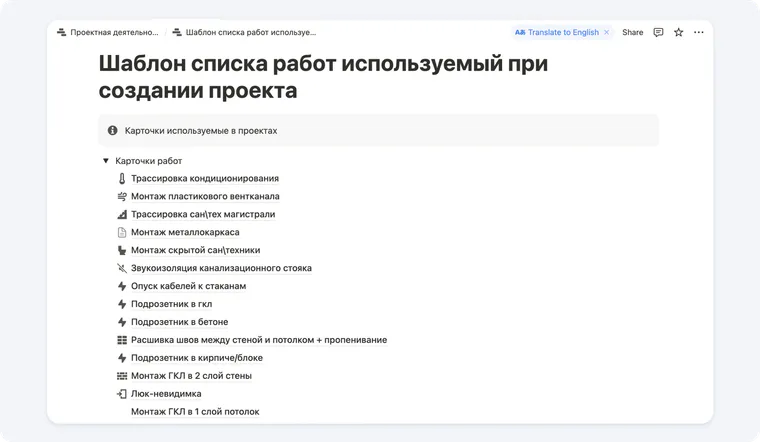
These phases can be defined in advance and divided into tasks that are easy to add to a schedule. A reusable task list reduces the time that site supervisors and project managers spend on repetitive setup.
2. Define task dependencies
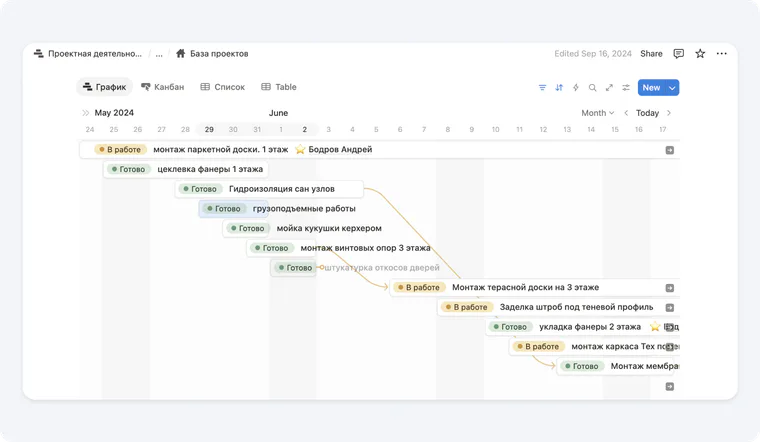
For example, electrical work cannot begin before the walls are in place. Recording this dependency helps prevent conflicts and incompatible tasks from being planned at the same time.
3. Assign task owners
Every task should have an owner. Even when a schedule is created for internal use, the team needs to know who is responsible for each piece of work.
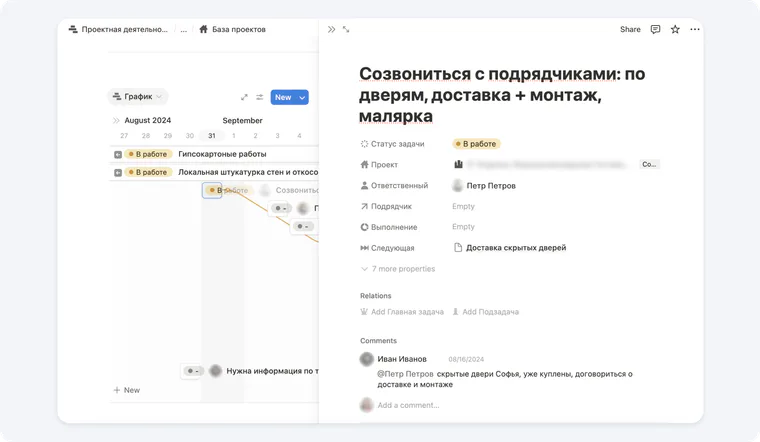
4. Add schedule buffers
Allow extra time for weather risks, delivery delays, and unexpected events. The buffer should reflect the uncertainty and duration of each construction phase.
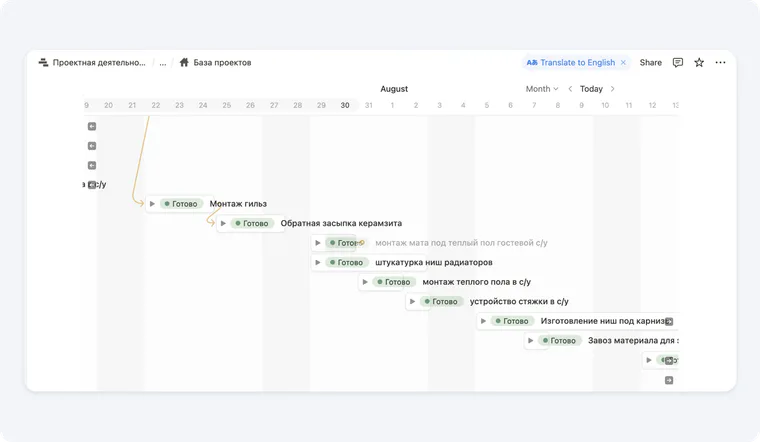
5. Update the schedule regularly
A static schedule quickly becomes outdated. Record actual changes as work progresses so the schedule remains useful for day-to-day management.
Example construction schedule in Notion
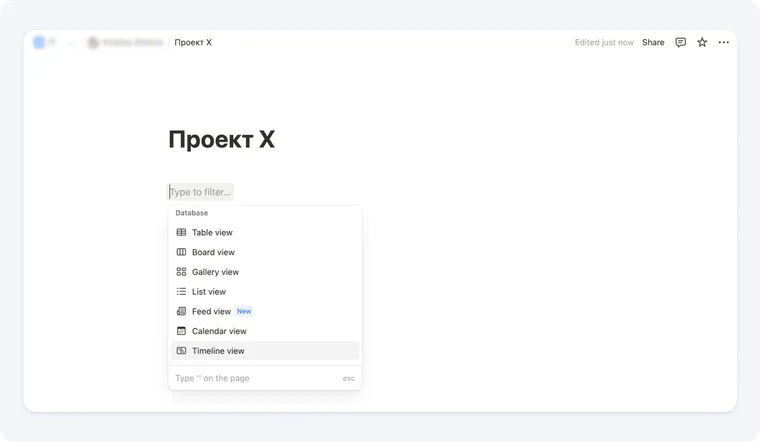
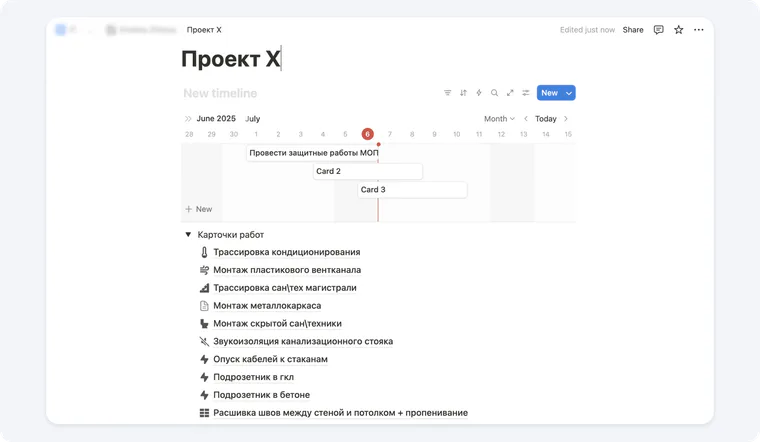
Notion is one practical example because its Timeline view can display tasks and dates visually. The same process can be reproduced in another project tool that supports tasks, dates, and dependencies.
A construction schedule can be set up in this order:
1. Create a Timeline view and place the work on it
2. Add the first task
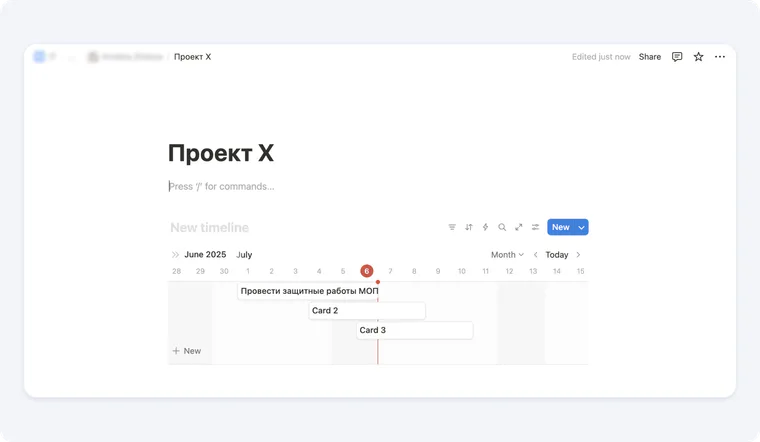
For convenience, prepare a reusable list of tasks that can be carried from one project to another.
3. Set task dates and assign owners
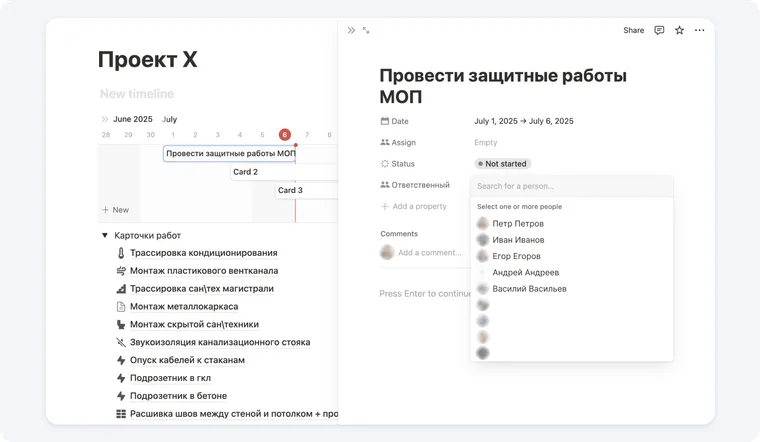
4. Track task status and keep the timeline current
Use filters and sorting to show, for example, only the current week or only incomplete tasks.
Teams that want to learn more about Notion and project management can use the private Telegram channel for PRO+ users of the 101 app. It regularly publishes audio podcasts and other practical materials, including training content on project management in Notion.
A consistent scheduling process makes responsibilities and task conflicts easier to see before they disrupt work.