A cash shortfall in a project-based business often has little to do with making a loss. The money exists on paper, the contract allows for a profit and work is progressing, yet on a particular day there is nothing available to pay the bills. This is a cash shortfall: available funds are insufficient to meet mandatory payments when they fall due, even if more money is expected later.
To avoid those days, assess a project's finances from two perspectives. The first answers the question, “How much will I earn on this project?” The second asks, “When will money come in and when will it go out?” The second perspective matters more for keeping the business running.
Here is a practical way to build a calculation that shows cash week by week, highlights shortfalls and helps you adjust the terms in advance: the payment schedule, purchases, advance payments and reserves.
Contents:
- Why does profit not protect you from a cash shortfall?
- What information do you need for a reliable calculation?
- Two models: project profit and project cash flow
- How do you build a project cash flow calendar?
- Stress testing: how can you spot a cash shortfall in advance?
- Which decisions can prevent a shortfall before work begins?
- How do you manage project finances in the 101 app?
- Checklist before signing a contract
Why does profit not protect you from a cash shortfall?
In construction and renovation, cash rarely moves evenly. The client pays in stages, purchases are often needed immediately, the crew is paid regularly, and taxes and ongoing expenses follow their own schedules. A project can therefore be profitable and still run short of cash midway through its cycle.
A common mistake is to assess a project's finances using only its cost estimate and margin. These are useful when choosing projects and setting prices. To guard against a cash shortfall, you also need a planned cash flow calendar showing when receipts are expected and which payments are due. You can then compare the plan with actual receipts and payments. In management accounting, this is cash flow.
Another pitfall is confusing accruals with cash. The work acceptance document has been signed and revenue is recorded, yet payment will arrive in 14 days. Signing the document does not put money in your cash balance; receiving the payment does.
What information do you need for a reliable calculation?
The good news is that you do not need a finance department to make this calculation. You need discipline in collecting the inputs. Gather exactly what affects profit and payment dates.
The minimum information for a project:
- The contract price and stage structure: what the client pays for and when.
- The payment schedule: dates, amounts and terms, including advances, payment on completion of a stage, retentions and deferred payment.
- A cost estimate broken down into categories: materials, labour, subcontracting, equipment and delivery.
- A purchasing schedule: what must be bought at the start and what can wait until closer to handover.
- The payroll budget and how often the crew is paid: weekly, every two weeks or monthly.
- The overheads allocated to the project: site supervision, office costs, advertising and transport.
For a sound breakdown of expenses, see the articles on category structure: expense categories in construction (in Russian) and allocating expenses to categories (in Russian).
Two models: project profit and project cash flow
Next, prepare two tables, or two reports in your accounting system. Keeping them distinct turns “I feel we will make a profit” into a calculation.
1) The project profit model: the project's profit and loss statement, or P&L. This covers revenue, direct costs, the allocated share of general overheads, final profit and profitability. The basic approach considers contribution margin and profit after all costs have been included.
2) The cash flow model for the project. Dates matter here: when money is received from the client, when suppliers and the crew are paid, and the balance at the end of each week. This is the model that reveals a cash shortfall and its size in advance.
In practice, first check that the project is profitable in the P&L, then build a cash plan using receipts and payments, taking the payment terms into account. Exclude non-cash items and include payments that do not appear in the P&L. This will show where you may need funding to bridge a gap: an advance payment, a postponed purchase, a credit limit or a reserve.
How do you build a project cash flow calendar?
A project cash flow calendar is straightforward: a list of weeks or days, with four rows for each period: opening balance, receipts, payments and closing balance. The challenge is remembering every mandatory payment.
A practical process for keeping cash under control:
- Step 1. Record the contract stages and the dates on which you can realistically receive payment, taking account of deferred payment terms and acceptance of the work.
- Step 2. Schedule expenses over time: materials, subcontracting, advances, wages and logistics.
- Step 3. Add the company's regular payments that the project needs to cover: communications, rent, accounting, taxes and fuel.
- Step 4. Bring everything together by week, keeping receipts and payments separate.
- Step 5. Calculate the closing balance for each week and find the lowest balance over the entire project.
- Step 6. Set a safety rule: the minimum balance must stay above your chosen threshold, set according to your reserve or credit line.
- Step 7. Record the decisions that will close the gaps: prepayments, postponed purchases, smaller stages or agreements with suppliers.
If the project involves funds issued to participants for expenses, such as cards, cash or purchases made by a site supervisor, track them separately and consistently. Otherwise the calendar may look reassuring while missing part of the picture. For more on this, see tracking funds issued for expenses (in Russian).
Stress testing: how can you spot a cash shortfall in advance?
Once you have built the calendar, test it against a few realistic scenarios that could disrupt it. This check is often more important than the first version of the calculation.
Run these three stress scenarios:
- The client's payment is delayed by 7–14 days.
- Material prices rise by 10% halfway through the project.
- A project stage slips by one week while the crew continues to be paid.
Then look at two numbers: the size of the shortfall, meaning the largest amount missing at any point, and its duration, meaning how many weeks you remain below the safe balance. If there is a gap, it is better to close it before signing the contract, while the terms can still be discussed calmly.
Which decisions can prevent a shortfall before work begins?
Once you find a shortfall, the next step is to make management decisions. The aim is to change the project's terms so that receipts arrive before mandatory payments, or to make payment deadlines less demanding.
These measures often help:
- Rework the payment schedule: add an advance for materials, split a large stage into two or link payments to milestones.
- Move purchases closer to when the work is done and replace a single bulk purchase with deliveries in smaller batches.
- Agree with suppliers on payment after delivery or deferred payment for some items.
- Set aside a reserve and replenish it regularly. 101 has a separate article on a company reserve fund.
If the project's margin is already tight, cost overruns or delays increase the risk of running short of cash. Check your cash plan. Revisit the project's finances and make sure its contribution margin allows for the risks of delays, defects, rework and logistics. A useful starting point is to calculate profitability regularly for each project and compare projects with one another. The guide to profitability can help you establish this routine.
How do you manage project finances in the 101 app?
Spreadsheets work while you have only a few projects and all payments pass through one person. As the business grows, you have funds issued for expenses, several projects, multiple cards and purchases made on the go. The calculation can then drift away from reality.
The 101 app records receipts and expenses for each project. The project balance shows the difference between receipts and recorded expenses; it is not the amount of money held by any particular participant.
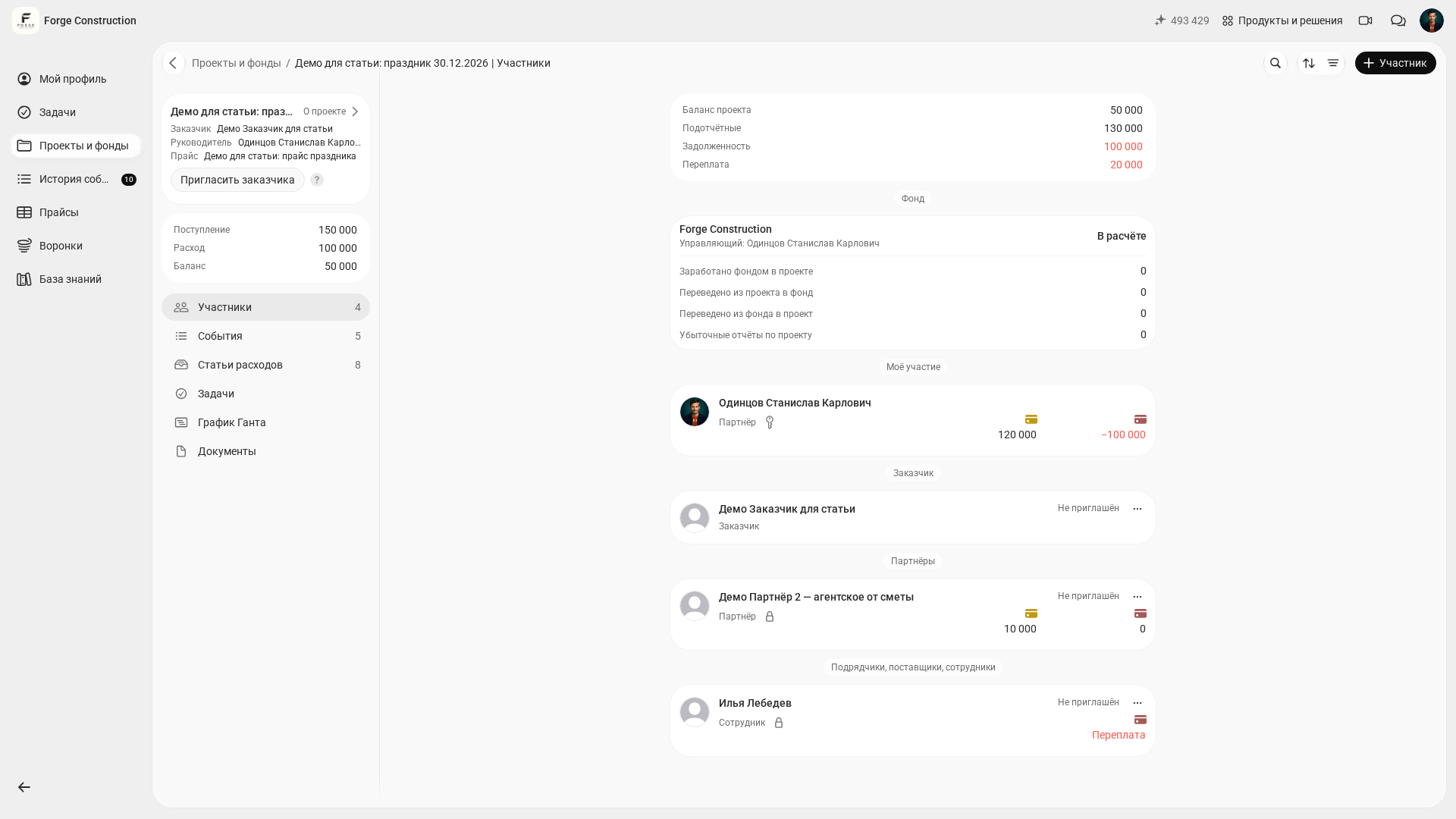
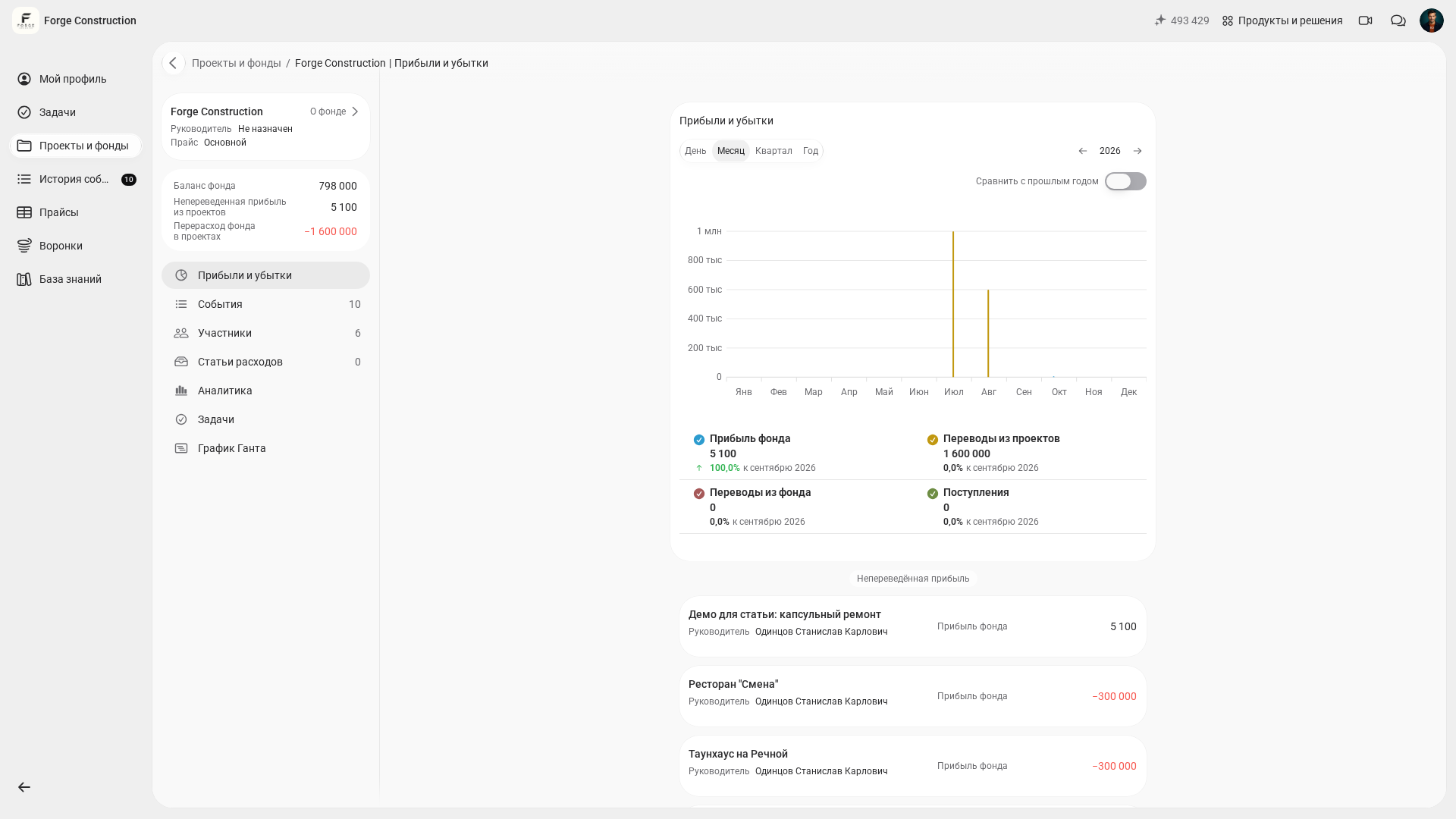
In the Company Fund, “Analytics” shows recorded operating expenses over time.
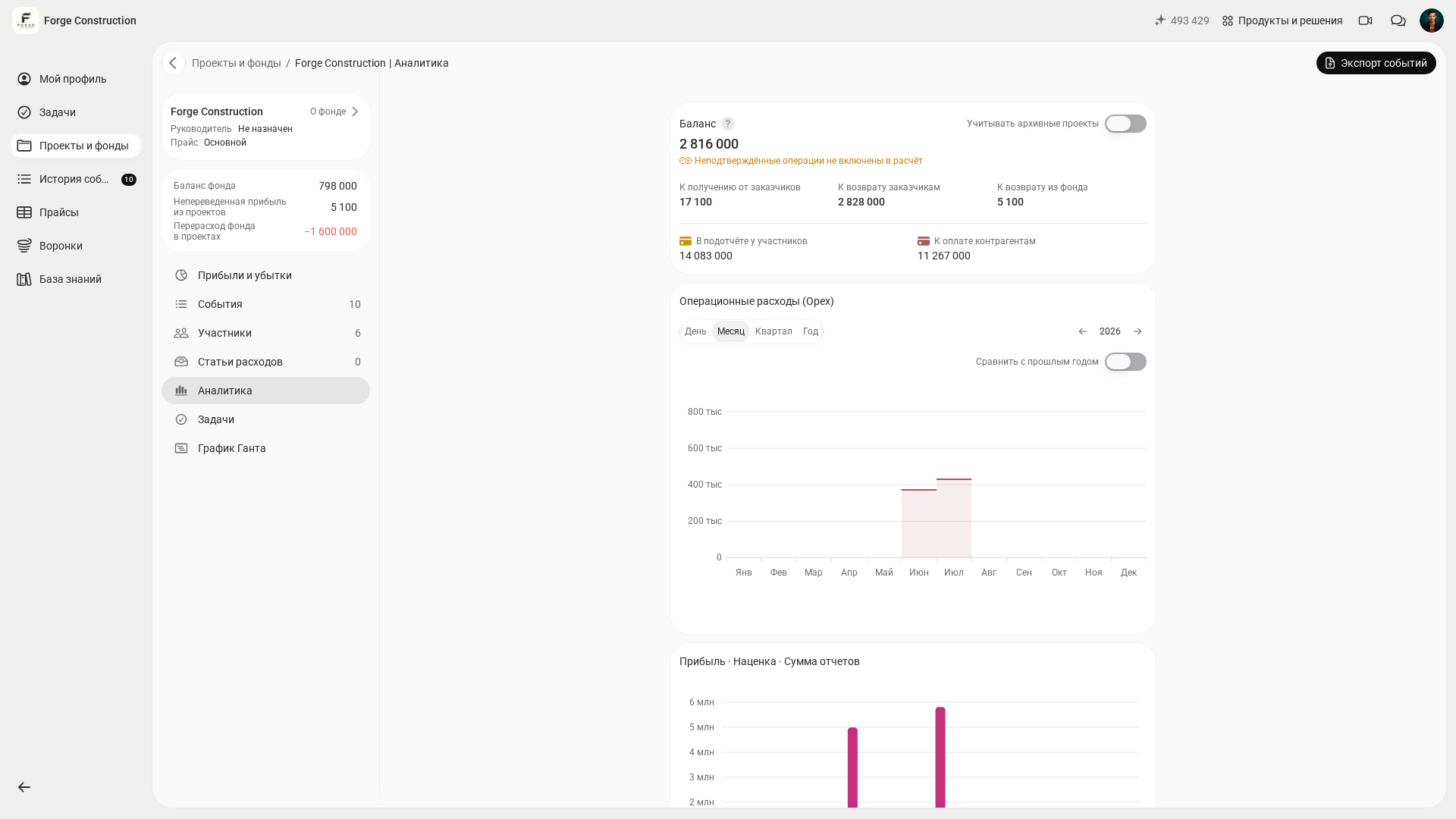
The “Profit and loss” section shows the Fund's profit and transfers from projects separately. The Fund's profit is not the same as the total profit of each project. How complete the results are depends on the data recorded and your permissions. Check the cash flow calendar and the full P&L separately: recording cash movements alone does not mean they will be generated automatically.
To understand the full approach to project accounting, including expense categories, planned versus actual figures, funds issued for expenses and reporting, start with “Project financial management: budgeting and controlling money in the 101 app”.
For a manager, reviewing cash regularly is an important habit. Cash flow, P&L and the balance sheet work together to give a clear picture of each project and the company as a whole. If your understanding of the reports still feels fragmented, see the article on accounting for income and expenses.
The availability of financial sections depends on your current plan and your permissions in the company.
To see how this works in the 101 app, book a product demonstration.
Checklist before signing a contract
You can work through this checklist in 20 minutes, once the cost estimate is ready and the contract is still being discussed. It helps you avoid a situation where the figures initially add up, followed by a cash shortfall.
- Check project profit: revenue covers direct costs, overheads and a reserve for the risk of delays.
- Prepare a weekly cash flow forecast and identify the lowest balance.
- Test a payment delay of 7–14 days and determine the size of the shortfall.
- Agree on a payment schedule that keeps purchases and advances from getting ahead of the client's payments.
- Set up a reserve fund and a rule for replenishing it.
- Decide who is responsible for funds issued for expenses and how promptly supporting receipts must be submitted.
If the calendar still shows a shortfall after these checks, that is a useful result too. You can renegotiate the project's terms or turn it down before you end up financing it with your own money.