Contents:
- What counts as turnover, and what is different about construction companies?
- Diagnosing the problem: why are people leaving?
- Pay and transparency: how can you make earnings clear?
- Organising site work without chaos
- The foreman’s key role: how can you retain a project manager?
- How can you recruit people who will stay and work productively?
- How can you make changes last?
- Frequently asked questions
What counts as turnover, and what is different about construction companies?
Employee turnover reflects the ending of employment relationships over a period. In an office role, this might mean an employee leaves and a vacancy opens. Construction and renovation can involve a mix of arrangements: self-employed tradespeople, crews hired for a particular project and contractors to whom you provide a flow of work. Consider the end of cooperation with project-based tradespeople and contractors separately from employee turnover.
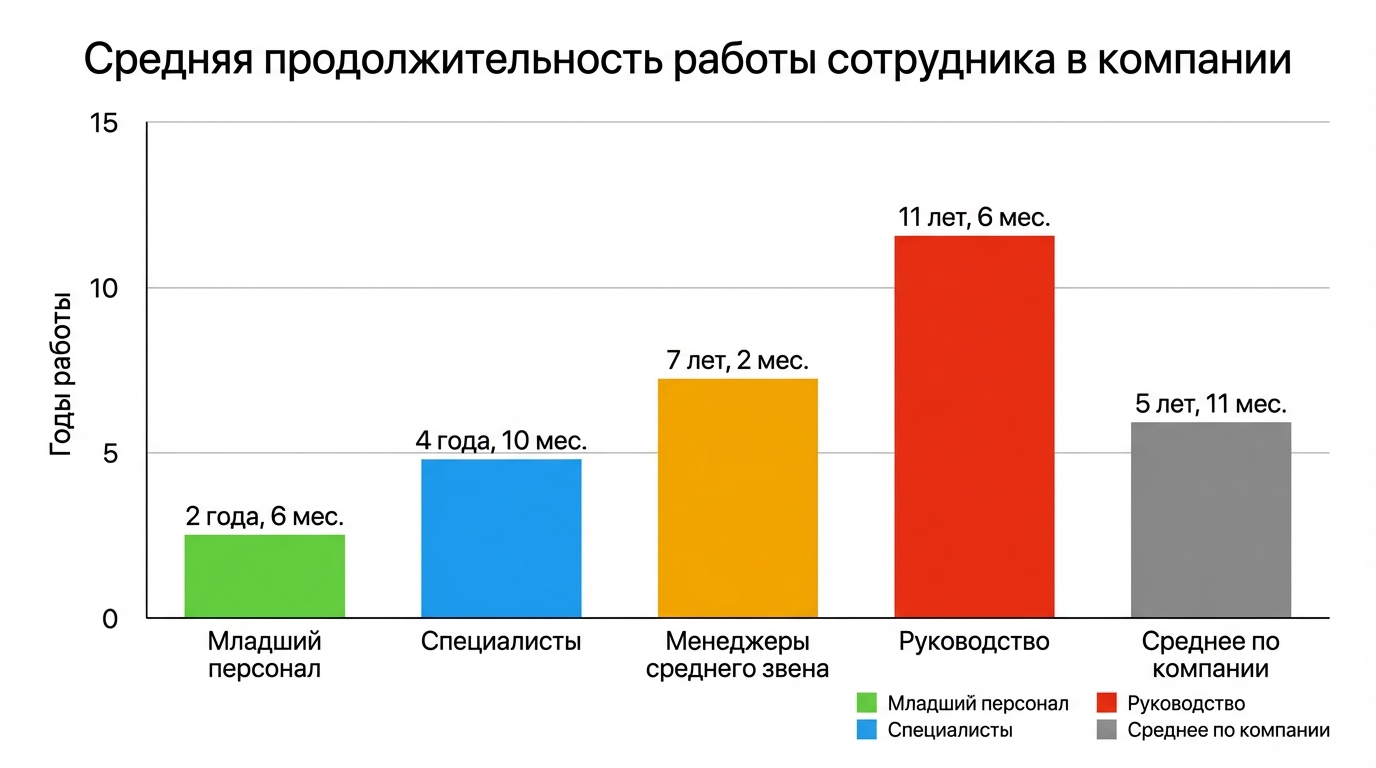
It is therefore useful to distinguish two layers when analysing turnover. The first is the core team: foremen, procurement staff, the estimator, the manager and others who keep processes running. The second is the project workforce: tradespeople and contractors you work with in successive waves. If the core team is unstable, examine how this affects management, specialist departures and client relationships.
For an internal analysis covering a calendar month, define two separate measures. For employees, divide the number of employees whose employment relationships ended during the month by the average daily employee headcount for that same month. For project contractors, you can follow a fixed group: the denominator includes contractors with whom you planned to continue working at the start of the month, and the numerator includes only those members of that group whose cooperation ended during the month while work for them remained available. Do not automatically count the completion of an individual project or a lack of new orders as this kind of departure. This is an example of an internal monitoring method: define the group, period and reasons in advance, and do not combine employee and contractor measures. Within each group, also examine individual roles. To express the result as a percentage, multiply the ratio by 100. If the denominator is zero, do not calculate the measure; show the group size and number of departures alongside it. For employees, also record the reasons why employment relationships ended.
When a strong foreman leaves, check whether the tradespeople plan to continue working with your company and how client relationships will be maintained. Also assess how closely the project manager’s work is connected to the company’s shared processes. The article on recruitment rules (in Russian) discusses the role, authority, support and terms of cooperation.
Diagnosing the problem: why are people leaving?
Reducing turnover starts with diagnosis. You need a record of departures: who leaves, when they leave and what happened before they left.
For diagnosis, consider three possible points at which people may leave. The first is the initial 1–2 weeks: did expectations match reality? The second is the first payment cycle: were the agreed deadlines met, were the rules clear and did any disputes arise? The third is the end of a project: are there conditions for continued cooperation, or does the team choose another company? These are reference points to check against your own departure records, without any claim about how frequently they occur.
To look for recurring reasons, compile a simple table of departures over a chosen period and state both the period and the number of observations. With a small sample, treat conclusions as preliminary and add to the table as more data becomes available.
| Symptom | What should you check? | What should you address first? |
|---|---|---|
| People leave after the first advance payment | How the person understands the pay arrangement and deadlines | A payment calendar, transparent calculations and recorded agreements |
| People leave after a conflict on site | Who makes decisions and how disputed issues are escalated | Rules for responsibility and a clear escalation route |
| People leave at the end of a project | Whether there is another project and when it starts | A workload plan, a schedule for specialists and a pipeline of projects |
| Strong specialists leave, while unsuitable people remain | How much time approvals and hands-on supervision take | Delegation and less micromanagement |
A short exit interview is a useful addition to diagnosis:
- What made you decide to stop working with us?
- What was inconvenient in day-to-day site arrangements: access, keys, materials or downtime?
- What was frustrating about management: approvals, supervision or task assignment?
- What was unclear about money: payment deadlines, deductions or additional work?
- What could we change that would make you willing to return in a month?
If people repeatedly say “every little thing needed approval,” “I was waiting for a decision” or “I could not move the crew without a phone call,” examine your management style. Compare decision-making delays with work deadlines and the reasons people give for leaving. Discuss which powers specialists felt they lacked and how they experienced supervision.
Pay and transparency: how can you make earnings clear?
When investigating departures, examine both pay levels and the predictability of earnings. For example, someone receives extra pay today, hears “later” tomorrow and faces a dispute over quantities the next day. Discuss with tradespeople and foremen whether the terms allow them to plan their lives and trust the rules.
When discussing motivation, use the connection between action, result and reward. Set out the calculation rules and agreed payment schedule in advance. The article on profit sharing considers a confirmed financial result, money available after mandatory expenses and the terms of the agreements. Treat basic pay for work and profit sharing separately; assess the chosen arrangement’s effect on retention through your own observations.
The second part is transparency within the project. A possible money dispute in renovation might sound like this: “we did more work,” “we used more materials” or “the extra work was agreed verbally.” To discuss specific agreements and events, record who spent the money, what it was spent on, what supports the expense and who authorised it.
Another source of tension is money issued to people for project expenses. Careless accounting for these funds can create risks of fraud, cash shortfalls and disputes within the team and with the client. Check amounts issued, supporting evidence for expenses and unresolved amounts.
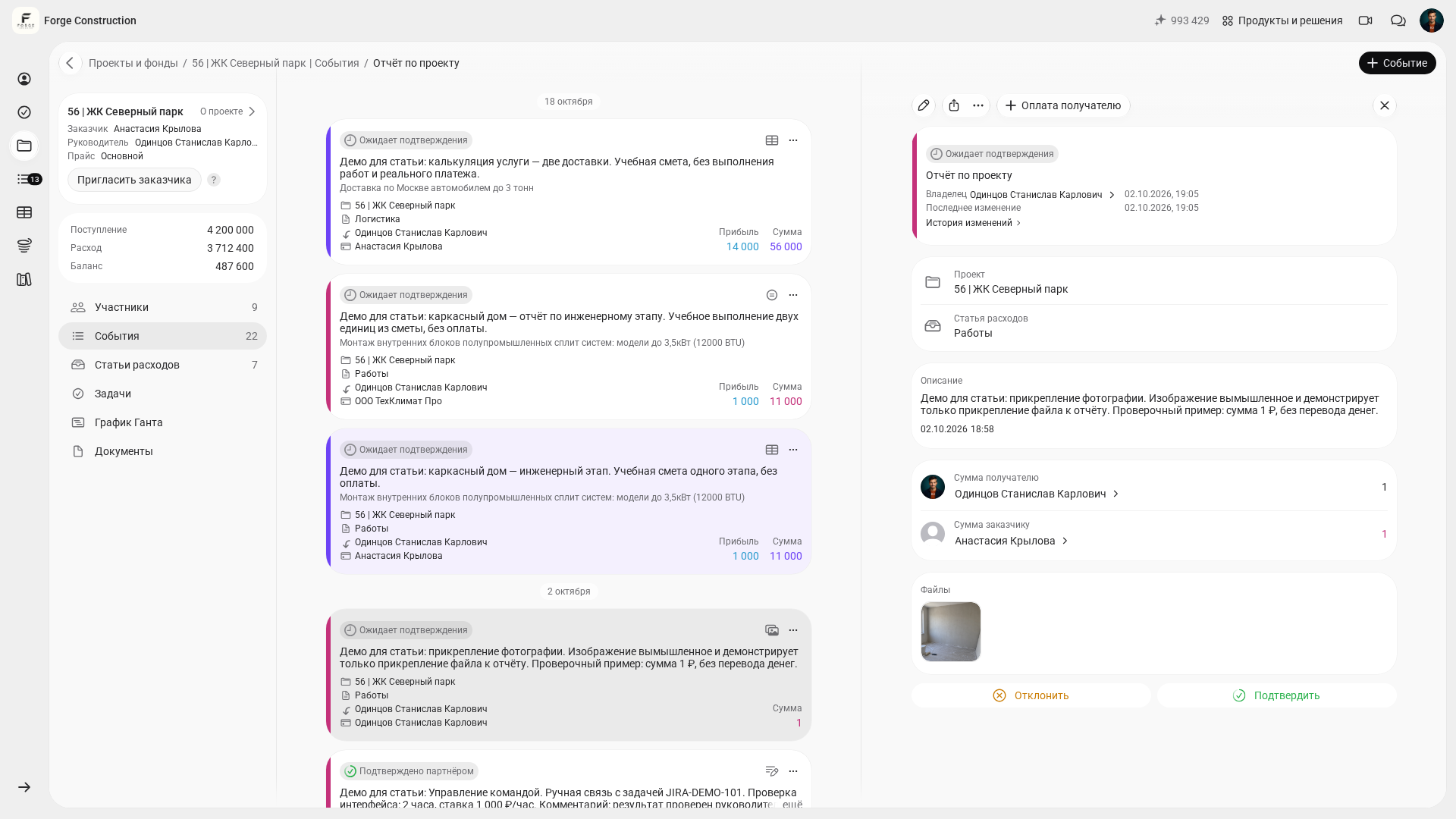
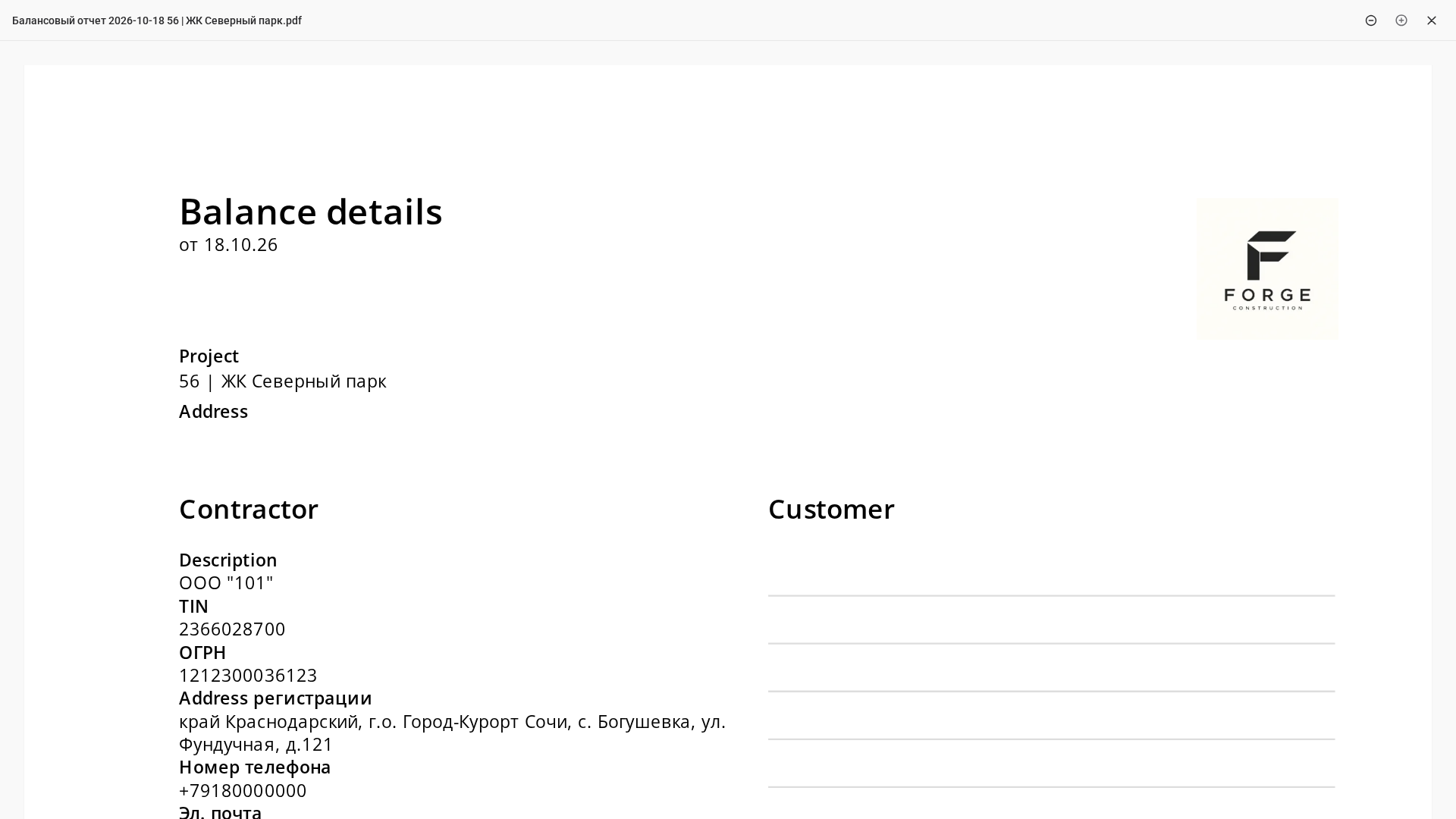
If you manage projects digitally, check whether shared data helps the team understand how earnings are calculated and how deadlines, rework and procurement discipline affect them. When choosing a project management system, use three questions: how much money came in, what it was spent on and who confirmed the result. Distinguish movements of money from profit calculations: define in advance which income and costs form the financial result. Compare a participant’s accrued earnings separately with actual transfers. In 101, monetary transactions and participants’ reports can be reconciled by project. The “Documents” section generates reports from the data entered; a receipt or photograph of a transaction is attached to the corresponding event. Keep general contracts and project files in a location agreed by the team, with access checked.
Measures to assess in your work following diagnosis:
- A payment calendar that is followed even on difficult projects.
- Clear rules for additional work: how it is agreed, calculated and approved.
- In your procedure for accountable funds, distinguish money issued through a Transfer (“Перевод”) from an actual purchase recorded in a Report (“Отчёт”). Keep the receipt or other supporting evidence and a comment; check the confirmation status separately. Do not duplicate an amount already issued by recording another transfer.
- Promptly resolve disputes over quantities by recording stages and taking photographs.
If motivation has become a question of the overall system, see the 101 materials on motivation in construction companies and retaining a team through clear rules. Motivation in a construction company (in Russian)
A separate article considers the connection between results and money through clear rules, the distribution of confirmed profit and agreed payment deadlines. Profit sharing and payment schedules
Organising site work without chaos
Calling people lazy does not explain working conditions when you investigate a departure. Consider a possible scenario: a tradesperson has a week of downtime because materials are missing, a foreman has ten parallel chats and procurement staff have to make urgent purchases without time to compare prices. Check whether the decision to leave is connected to fatigue and these working conditions.
One factor to examine is how specialists’ attendance on site is planned. Find out how the team views situations where a site is alternately empty and overcrowded, or incompatible activities overlap. A workforce schedule can be used to coordinate when people work on site and assess the risks of downtime and unnecessary expenditure.
One possible benefit of shared planning for retention is distributing responsibilities between the foreman and the company and involving the site manager in a common system of work. Check on your own projects which responsibilities can be shared, how much work depends on the manager’s personal organisation and whether this changes working conditions and the reasons people leave.
Another factor to examine is management style. Look at how much time approvals and supervision of individual actions take. If they delay decisions, compare this with work deadlines and the reasons people give for leaving. If this situation sounds familiar, it is worth examining micromanagement in more detail. Micromanagement in construction (in Russian)
A practical organisational baseline to assess on your own projects:
- A weekly plan for each project: who will be on site, what the dependencies are and which deliveries are critical.
- A short escalation route: if something stalls, who should be contacted and how soon a decision should follow.
- A shared place for project agreements, so they do not have to be searched for across chats and voice messages.
- Records of financial transactions by project, so procurement staff, the foreman and the owner see the same information.
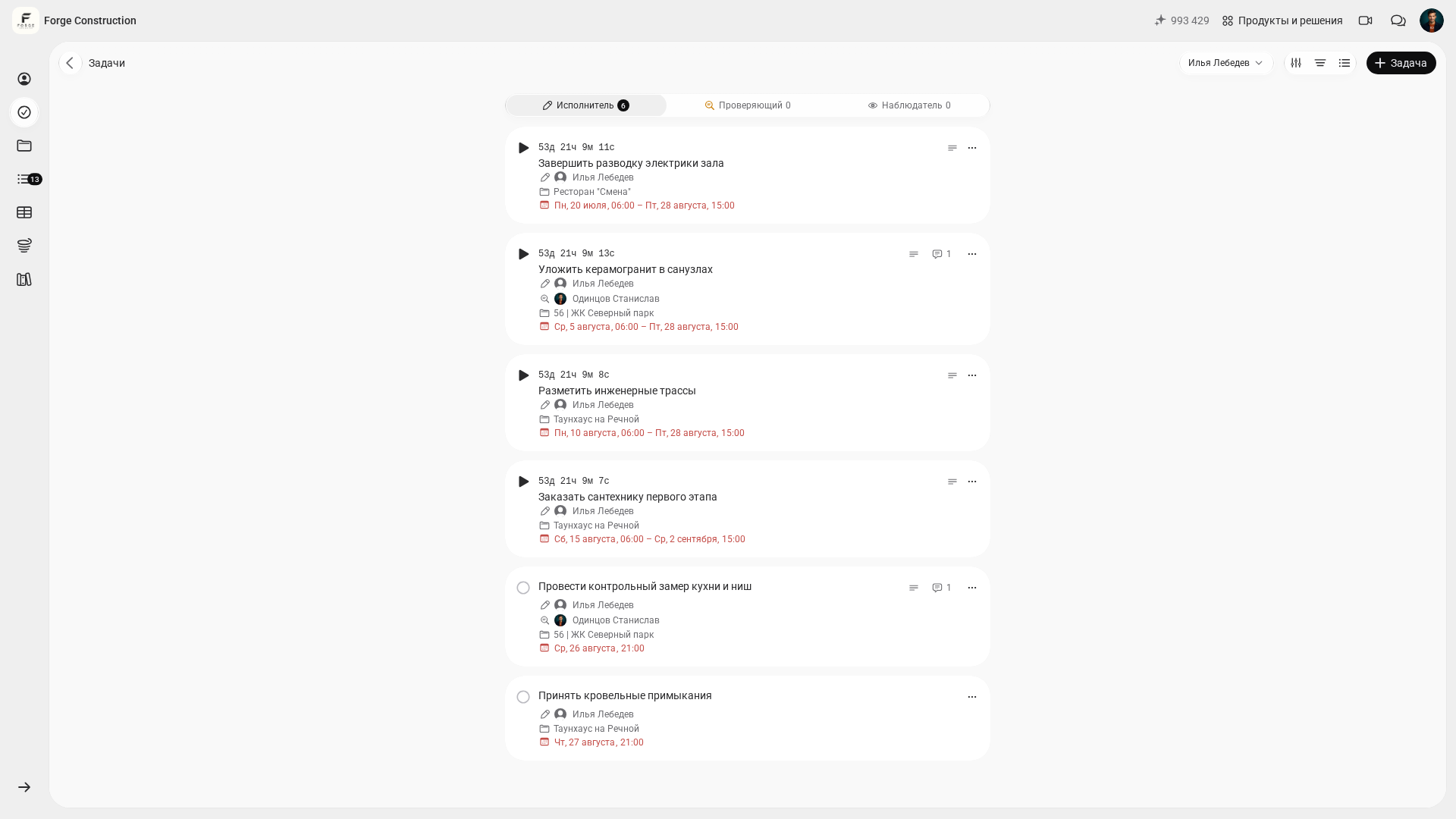
If you are choosing management tools, see the selection of project management tools and criteria for choosing a system. Project management tools
The foreman’s key role: how can you retain a project manager?
In renovation, a foreman may effectively combine responsibility for deadlines, people, communication and quality. When a foreman leaves, examine the risks to the crew, continuity of processes and client relationships.
When discussing foreman retention, clarify the person’s role in the company and the prospect of further work after the current project.
Conditions to discuss with the site manager:
- Clear authority: which decisions the manager makes independently and which require another party’s approval.
- A manageable workload: a reasonable number of projects, without relying on heroic effort.
- A transparent earnings arrangement: percentages, KPIs and performance bonuses with clear rules.
- Support with procurement and documents, so the foreman does not have to handle everything alone.
If you want to describe the role and expectations so that a foreman can see opportunities for development, this breakdown of duties, skills and ways to make the job easier (in Russian) may help.
Another approach to discussing retention is to develop the manager, alongside checking their work (in Russian). Discuss with the project manager how responsibility, a sense of urgency and care are expressed in work with the team.
Pay terms are important to discuss when you hire a foreman. As a starting point for your checks, you can use the article on pay ranges by city and ways of calculating earnings (in Russian). It presents an overview of the Russian market in 2026 and historical examples for cities from 2025. For your own vacancy, check the region, date and pay terms separately.
How can you recruit people who will stay and work productively?
Urgent recruitment can create a risk of mismatched expectations: “we urgently need a foreman on site” or “we urgently need tilers.” If you recruit people for a specific job, check whether they understand the rules, earnings and responsibilities.
Check that the vacancy description is complete: the types of projects, work schedule, number of projects, how earnings are calculated and which tools are used. Then discuss with the candidate whether these conditions match their expectations.
For a foreman vacancy, our blog provides a ready-to-use structure (in Russian): fill in its fields and check that the working conditions and required level of experience are clear.
When recruiting a foreman, assess the substance of the role: the management tasks involved, what the person will be responsible for and how they will work with the team. This approach is explained in the article on recruiting project managers.
For onboarding, you can use the following programme for the first month and assess it through feedback:
- On the first day, explain the money rules: when payments are made, how quantities are calculated and how additional work is recorded.
- During the first week, explain the management rules: where the plan is kept, where agreements are recorded and how decisions are made.
- At the end of the second week, hold a checkpoint: what is getting in the way of work, what is needed from the company and where the risks are.
How can you make changes last?
You can approach reducing turnover as work on processes: an isolated motivational measure may leave other reasons for leaving unaddressed. Use a short assessment cycle: measure, change, check and record the rule.
Below is an example of a one-month plan for an owner or operations manager. Its timings and quantities are starting points for an initial assessment and should be adapted to the number of projects and the data available. Organising this assessment may not require a separate HR department.
- Establish a baseline for a chosen period, for example 3 months: how many people left, in which roles and at what points in the projects.
- Collect the reasons: for example, conduct 5–7 short interviews with people who left and people who stayed.
- Put money procedures in order: a payment calendar, rules for additional work and discipline in accounting for funds issued for expenses. If this accounting is inconsistent, start with the basics (in Russian).
- Stabilise planning: schedule specialists across projects, connect people to work stages and check deliveries.
- Remove unnecessary approvals: list, for example, 10 decisions a foreman makes independently and 10 decisions that require confirmation.
- Agree on a common procedure for handling project data: agreements, money, documents and reports. Account for different storage locations and access rights. When choosing a system, start with what you actually manage: deadlines, tasks and money.
- Make the rule explicit: for example, one change, one single-page document explaining how work should now be done.
When you need to show the team how the rules and tool work, you can arrange a demonstration using a clear training example. Afterwards, collect questions and check whether the procedure is understood and which actions still require manual supervision.
Frequently asked questions
- What turnover rate is normal for a renovation company?
This article does not set a general benchmark. Monitor employees and project contractors separately; within each group, examine roles and reasons for leaving. For the core team, also record unwanted departures separately. Look at trends across comparable groups and periods. An increase in the measure alone does not identify its cause: check the actual reasons for leaving, the group’s composition, seasonality and market conditions. Internal processes are one hypothesis to investigate. - What should you do if only foremen are leaving?
Check three things: authority, including whether micromanagement delays decisions; workload, including how many projects a manager can handle given their complexity; and pay, including whether calculation rules and payment deadlines are clear. If there is no shared planning, find out whether the foreman has to make up for this through extra coordination and whether that affects their decision to continue working with you. - Can turnover be reduced without raising pay rates?
That depends on why people leave your team. If your observations repeatedly identify payment delays, unclear rules for additional work or accountable funds, downtime caused by missing materials or drawn-out approvals, start with those problems. Recording rules may help, but assess their effect on retention through subsequent observations, without promising a general effect while pay rates stay the same. - Does increasing pay help reduce staff turnover?
Raising rates may be one measure if departures are linked to pay levels. Pay levels, payment frequency and timeliness, and performance bonuses are different questions. Assess their effects on retention through the reasons people give for leaving and subsequent observations, without promising a general effect. - Where should you start if everything is disorganised and people leave every week?
Start with two foundations: a payment calendar and a workload plan. Check whether payment dates and amounts are clear and who will work on which projects and when. Then move on to management rules and recording agreements. Assess results through reasons for leaving and subsequent observations.