The purpose of an organizational management system goes beyond “order on paper.” You need one when projects multiply, people take on different roles, decisions are made quickly, and everyone then spends a long time trying to remember who agreed to what and on which terms. At that point, management becomes a series of disconnected agreements, while the manager carries sales, production and finance alone.
A good organizational management system does two things: it sets out decision-making rules and provides regular figures that show what is happening in projects and across the company. This is particularly noticeable in a project-based business: tasks are kept in one place, money in another, documents somewhere else, and photo reports in chats.
Below, we look at how to build an organizational management system one part at a time: which elements keep it working, which tools usually meet different needs, and how to introduce it without overloading the team. Along the way, I will link to useful 101 resources on project management and accounting.
Contents:
- Why does an organization need a management system?
- What makes up an organizational management system?
- Rules and processes: how do you agree on them and put them in place?
- Money as part of management: management accounting
- IT tools: which should you choose for each task?
- Implementation: how do you make the system stick?
- Metrics and management routines
Why does an organization need a management system?
Imagine a construction or renovation company: one site needs cash for advance payments, a client on a second site is paying late, and plans for a third are changing. Procurement makes purchases on the strength of a phone call, the site supervisor reports once a week, and documents are gathered just before handover. Work is formally underway, and “management” exists too. It relies on memory and personal oversight.
An organizational management system takes shape when you want the company to be run through rules and facts. Here, facts mean project figures: receipts, expenses, expense advances, profitability and obligations. This leads directly to management accounting, because decisions without it are often based on intuition.
A second reason is scaling up. As the workforce grows, the same mistakes recur across different teams. A management system is needed so that routine decisions are handled consistently: how to approve changes, record acceptance, issue expense advances and close stages. It is useful to complement this topic with a view of the stages of company development: “Business Evolution: 6 Stages of Company Development” (in Russian).
What makes up an organizational management system?
A common mistake is to confuse a management system with a single service. Software helps, while management itself depends on people and rules. The system consists of several mutually supporting elements.
A practical model has six building blocks. You can put them in place one at a time, without trying to “digitize everything” at once.
- Goals and boundaries. What counts as success for the month and for each project: deadlines, margin, quality and repeat sales.
- Roles and responsibilities. Who makes budget decisions, who approves changes, who handles procurement and who records completed work.
- Processes and rules. How a project starts, how an estimate changes, how stages are closed and how documentation is stored.
- Management accounting. Regular reports for management: project profitability, expense advances, debts and the Company Fund.
- Communication. The frequency of calls, the format of team meetings, channels, message templates and rules for recording agreements. A useful resource on this topic is “Project Communication Management” (in Russian).
- Tools. A set of systems for different needs: tasks and deadlines, CRM, finance, documents and a knowledge base.
When these building blocks are connected, the organizational management system becomes predictable. The manager no longer has to “remember everything,” because management follows a repeatable cycle.
Rules and processes: how do you agree on them and put them in place?
Processes are often described too broadly. What people actually need are short rules explaining what to do when a typical situation arises. In a project-based business, such situations recur constantly: “there is additional work,” “the contractor needs an advance,” “the client wants us to speed up,” “procurement is falling behind,” or “the site supervisor has not submitted a report.”
Start with a map of the project, from the client’s request to completion of the work. It helps to connect this workflow to an understanding of the management structure: who makes decisions at each point and how authority is shared between functional teams and the project manager. For this, see “Project Management Organizational Structures: Types and Setup”.
Next come three practical rules that can make a difference quickly.
- The change rule. Record every change: what is changing, who approved it, and its effect on time and money.
- The evidence rule. Every expense is backed by evidence: receipts, photos, comments and a link to the project.
- The acceptance rule. A stage is closed with an acceptance record or checklist: what has been completed, what remains and any outstanding issues.
At this point, consider tools that help put the rules into practice. When a project has its own card, participant roles, events and documents, there is less room for conflicting interpretations: the facts are gathered in one place.
Money as part of management: management accounting
An organizational management system without a financial component quickly turns into administration: there are plenty of tasks and reports, but the month-end profit still comes as a surprise. Management accounting restores the purpose by connecting the team’s actions to the numbers.
In brief, management accounting is a system of regular reports for management that answers these questions: how much the company has earned on each project, what its margin is, which expenses belong to a project and which are shared.
In a project-based business, the basic set is almost always the same:
- Projects. Each contract or site is managed separately, with its own balance.
- Cash flows, income and expenses. Cash received from clients and payments made show movements of money. Accrual-basis profit is based on revenue and expenses recognized for the relevant period; recognition and payment dates may differ. An advance received or a cash balance does not, on its own, show profit.
- Expense advances. Funds handed to a responsible person for purchases, other expenses or payments, with an obligation to account for their use. Evidence of expenditure and the actual transfer of money are recorded separately. This topic is covered in “How to Account for Expense Advances” (in Russian).
- Cost categories and detail. A clear breakdown of expenses helps you understand what is putting pressure on your margin. For a separate guide, see “How to Keep Track of Expenses Properly” (in Russian).
- Profitability measures. Contribution margin, margin percentage, profitability ratios and net profit. For an explanation of the terminology, see “Contribution Margin”.
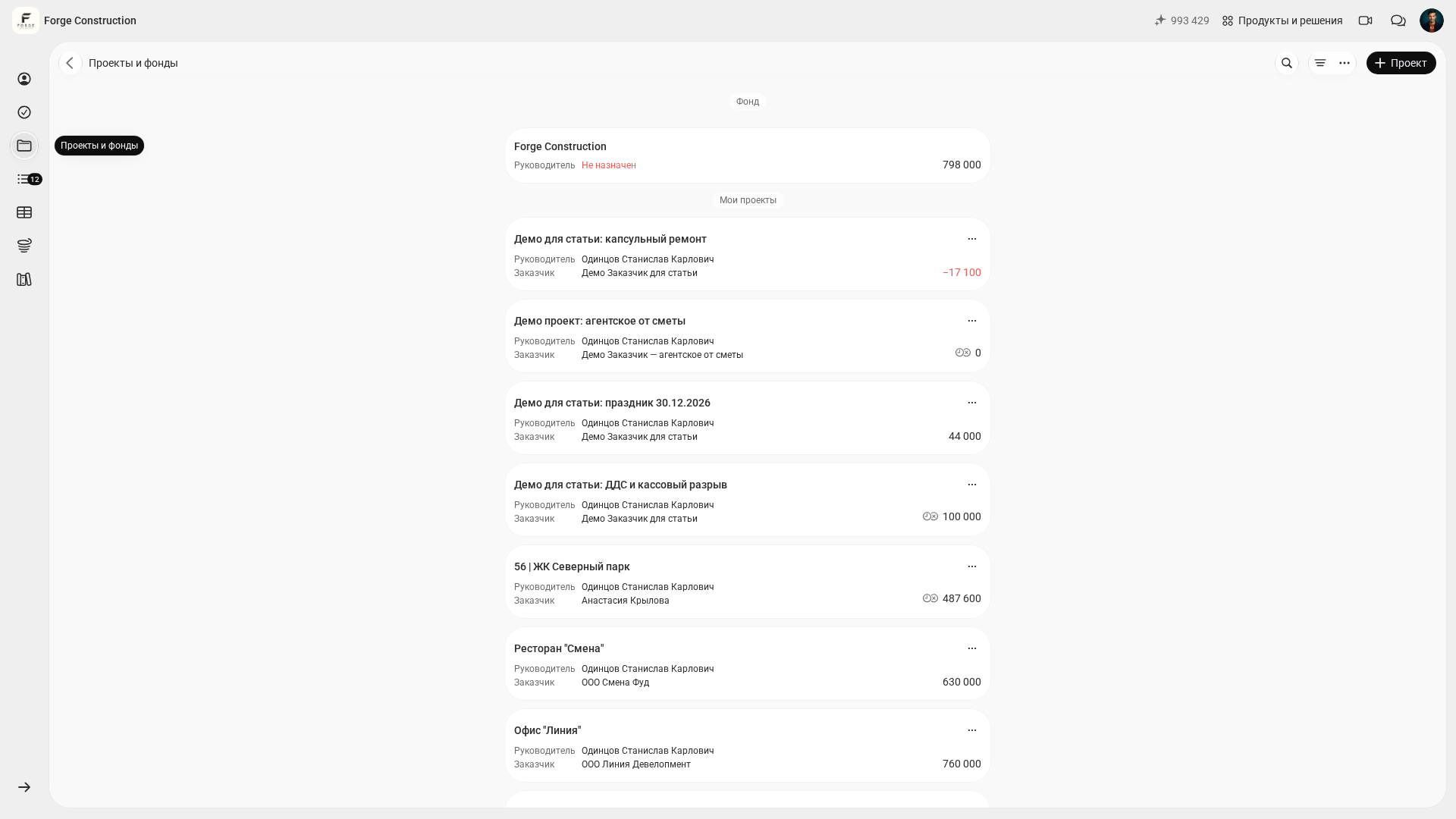
To see what this looks like in practice within the product, read “Management Accounting for Project-Based Businesses: How to Set It Up”. It shows how management accounting can work without a heavyweight ERP system when projects are structured and actual expenses are recorded consistently.
As the company grows, another layer appears: company-wide analytics and working with the fund. In 101, the Company Fund is used to account for internal expenses. Access to this section depends on your current plan and your permissions within the company.
IT tools: which should you choose for each task?
People often look for a single service when searching for a “management system.” It is more practical to consider a set of tools: which type addresses each specific management need. The 101 blog has separate selections and criteria for choosing project management systems: how to choose a project management system, an overview of 10 systems (in Russian), a selection of project management software.
To make an informed choice, organize your needs into categories: deadlines and tasks, sales, money, documents and communication.
| Management task | What matters in the system | Common mistake |
|---|---|---|
| Project tasks and deadlines | Person responsible, deadline, dependencies, board/Gantt chart | Trying to manage finances in a task tracker |
| Sales and lead management | Pipeline, statuses, reminders, contact history | Confusing CRM with a production plan |
| Finance and management accounting | Projects, receipts, expenses, expense advances, profitability reports | Calculating profit “at the end of the month from the remaining balance” |
| Documents and acceptance | Templates, storage, versions, quick access from the project | Keeping acceptance records and supplementary agreements only in messages |
| Communication | A single channel for recording agreements and a clear routine | Discussing important decisions in private chats |
A combination often works well in a project-based business: a task tracker for tasks and deadlines, plus a separate tool for money, reporting and documents. “Management” then becomes more than a collection of screens: you gain control based on facts.
Implementation: how do you make the system stick?
Introducing an organizational management system rarely fails because of the software choice. More often, it fails because of an attempt to change everything in a week. Teams have established habits, managers have limited time, and projects have existing commitments. Introduce the system in layers: start with rules and consistent recording of actual work and expenses, then add automation.
One option is a 7-day test to check whether the system can handle real work. This approach comes from the article on choosing a project management system: start with scenarios, then test them in real working conditions.
- Step 1. Choose one project with typical processes. Assign responsibility for recording completed work and actual expenses.
- Step 2. Document 10–15 rules covering changes, expense advances, procurement, acceptance and reporting. One rule, one paragraph.
- Step 3. Introduce a management routine. For example, hold one short status call and prepare one financial snapshot of the project each week. Choose the frequency to suit project duration and risks.
- Step 4. Add tools where they reduce manual work: collecting receipts, photo reports, document generation and project reports.
- Step 5. After two weeks, review which rules are not being followed, where data is missing, and which reports actually help you make decisions.
For a project-based business, it helps to keep in mind the management principles outlined in “Managing a Project-Based Business” (in Russian): project goals, the team, the plan, budget control, regular communication, risk management and delegation.
If you would like to review processes by role and understand where the company is losing control, book a 101 demonstration. You can discuss how to connect projects, reports and documents to suit the way you work.
Metrics and management routines
An organizational management system takes hold when regular routines are established. These are recurring checkpoints at which decisions follow the same rules. Without them, even a good procedure becomes a file people open before an inspection.
Here is an example of management routines for a project-based company, to be adapted to project duration and risks:
- Daily or every other day: a short update on work and blockers.
- Once a week: a financial snapshot of projects: receipts, payments, expense advances and obligations.
- Once a month: a company management report covering profitability, shared expenses, the fund and workload plans.
Choose metrics that directly inform decisions. In a project-based business, these usually include project margins, accounts receivable, how quickly expense advances are accounted for, the share of changes approved before they are carried out, and whether stage deadlines are met. The connection between metrics and accounting is explored in detail in the resources on management accounting.
A key sign that the organizational management system is working is that questions within the company become shorter. Instead of “Who is to blame?” you hear “What are the facts?”; “Why is there no money?” becomes “Which project is showing a shortfall, and under which cost category?” This is management with repeatable decisions and predictable results.