If receipts from the customer arrive later than payments for materials, advances and wages, a project may lack the cash needed on a payment date even when it is expected to make a profit. When several people handle transactions and information is scattered across different chats, you need to bring together the receipts, payments and obligations for each project to keep control.
Below are five financial management methods you can introduce without extraordinary effort. They suit construction, renovation and design businesses, as well as anyone managing several sites at once.
The principle is simple: you start tracking money by site, expense category and due date. You then add a consistent approval process and a regular review schedule. This turns financial management into a system.
Contents:
- Method 1. Each site is a separate financial unit
- Method 2. A payment calendar and cash flow statement for your planning horizon
- Method 3. Compare budget and actuals by category and separate direct and indirect costs
- Method 4. Expense advances and receipts: keep a paper trail
- Method 5. Margin, cash needs and reserves: three constraints
- How can you make these methods part of your daily routine?
Method 1. Each site is a separate financial unit
The first step in financial management is to stop treating the business as one shared pot of money. In project work, cash is tied to individual sites: one brings in a payment, another needs a purchase, a third is awaiting approval, and a fourth already owes contractors. Mixing everything together makes it impossible to tell which site generates profit, which needs financial support and which creates a cash flow gap.
A practical approach is to treat each site as a project and record its receipts, expenses and obligations separately. The same principle underpins the 101 app: one site is one project, with its own balance and participants.
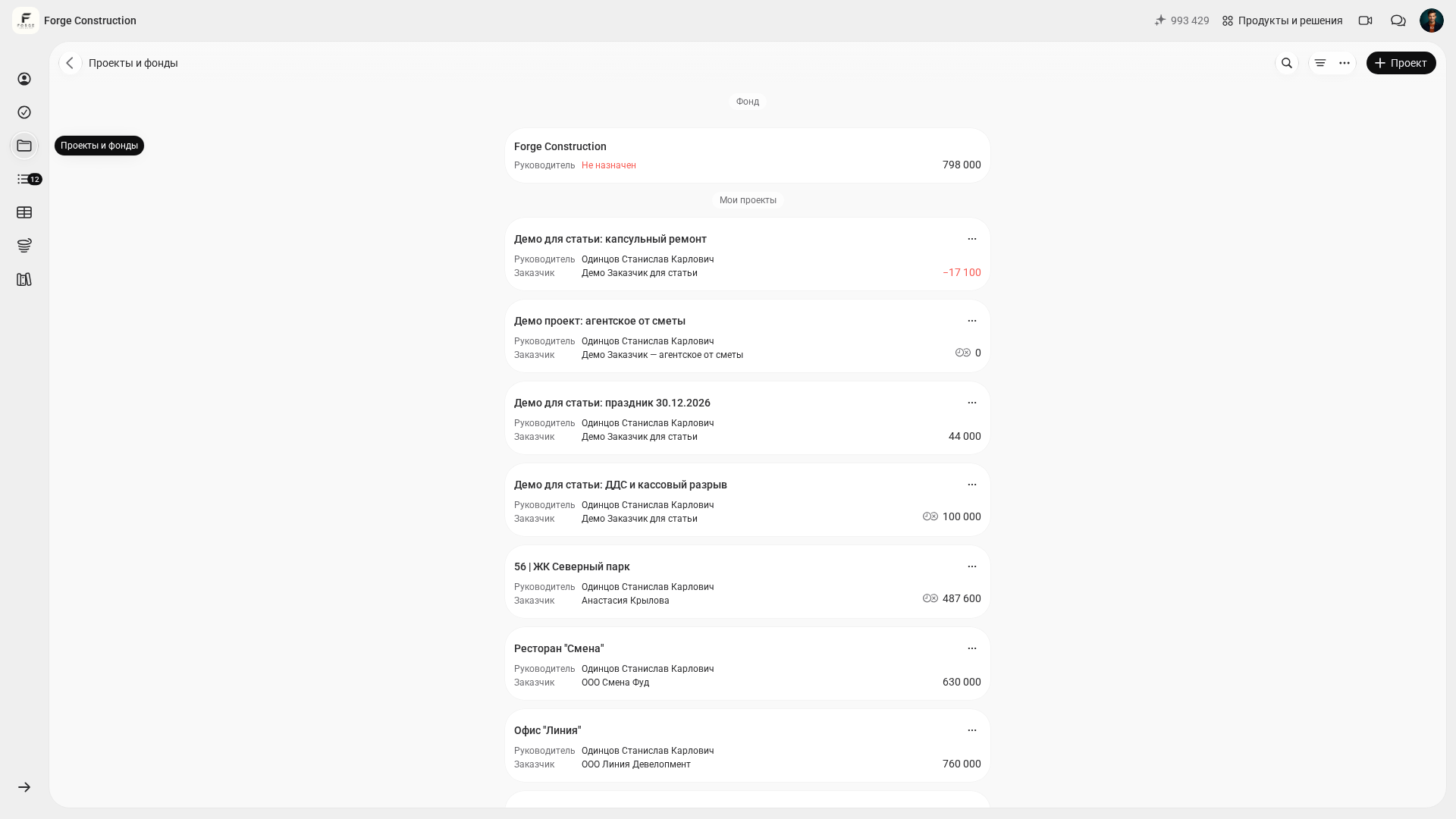
For a closer look at this model, see “Project financial management: budgeting and controlling money in the 101 app”.
Method 2. A payment calendar and cash flow statement for your planning horizon
Even a profitable site can run short of cash when actual receipts and payments occur at different times. To manage payment dates, use a payment calendar, which plans expected receipts and payments, and a cash flow statement, which records actual cash movements.
In the project's cash flow statement, record actual receipts and payments with dates, categories and links to the underlying transactions. Put unpaid obligations in the payment calendar on their expected payment dates. This gives you a manageable picture instead of leaving everything to be sorted out at the end of the month.
- List the mandatory payments for the next 6 weeks: wages, rent, taxes, loan repayments, materials and subcontracting.
- Add expected receipts for each site: advance payments, stage payments and additional payments for extra work.
- Calculate the expected closing cash balance: cash at the start of the week plus receipts minus payments. Mark the dates when available cash is insufficient for mandatory payments, and also check payments falling within the week.
- Make decisions in advance: reschedule purchases, agree an advance payment, split work into stages, change a supplier or revise the work schedule.
- Update the calendar once a week and reconcile it with actual movements in the cash flow statement.
If you have experienced cash flow gaps, keep this guide handy: “What is a cash flow gap? Causes, solutions and ways to prevent it from recurring”.
Method 3. Compare budget and actuals by category and separate direct and indirect costs
Managing finances through budget-versus-actual comparisons only works when expenses have a clear structure. Otherwise, the budget is a single figure while actuals are a collection of small payments that do not add up to a useful management picture.
Start with categories: materials, work, delivery, equipment, contractors and other expenses. Then manually compare budgeted and actual amounts for each category, using the same period and the same set of measures. The 101 app lets you record expenses by project and category. You can use these records for that comparison.
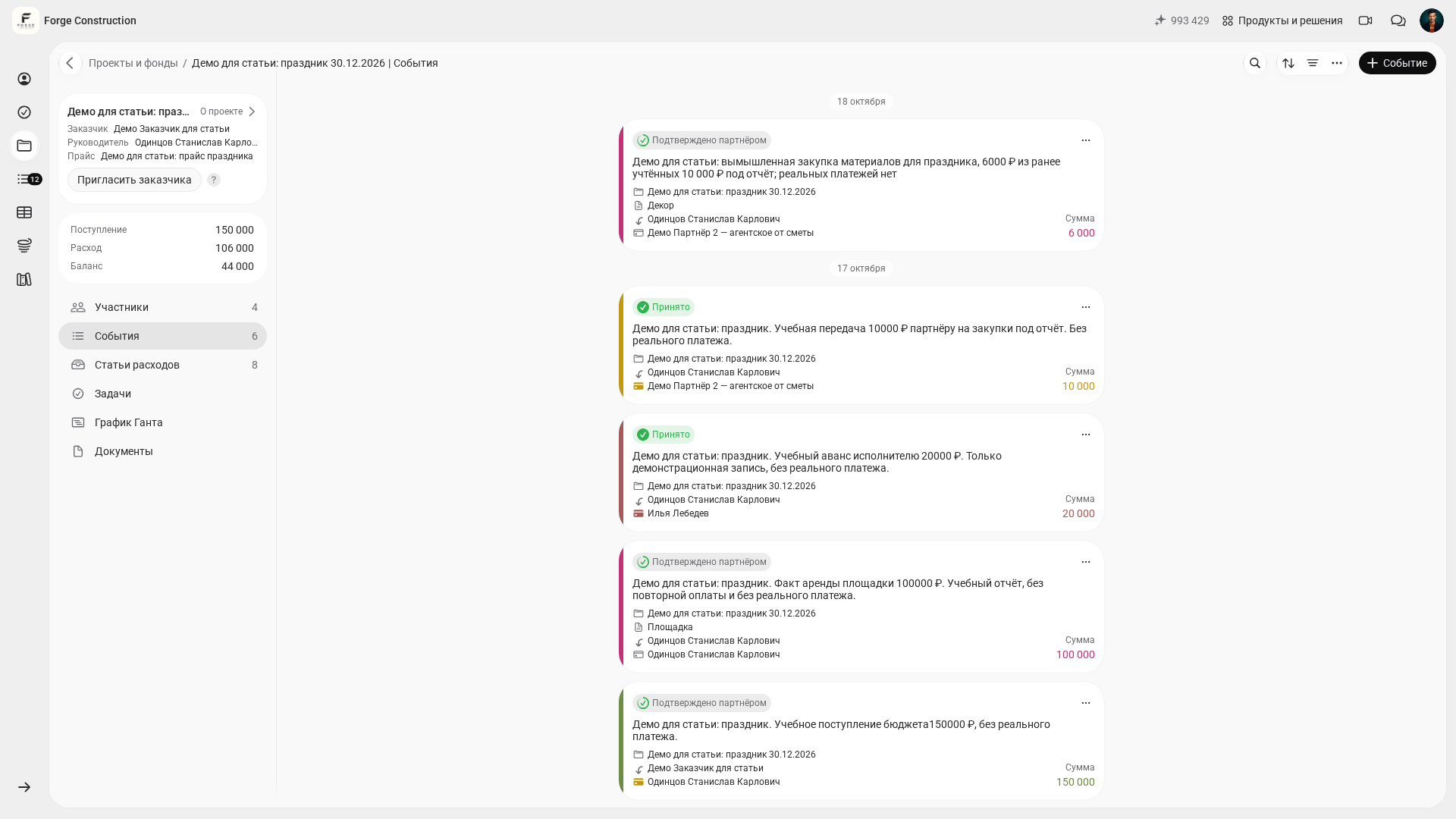
Another useful practice is to distinguish direct and indirect costs. Direct costs relate to a specific project; indirect costs can be recorded separately. When assessing a project's overall economics and profit, include a reasonably allocated share of indirect costs. To establish a clear approach to categories, see the article on allocating expenses by category (in Russian).
To discuss how to organise this accounting in the 101 app, book a product demonstration.
Method 4. Expense advances and receipts: keep a paper trail
Expense advances and small purchases can undermine any budget because of the speed and volume of transactions, even when individual amounts are small. Financial management depends on discipline: every expense needs an identified person responsible, a category, approval and a supporting document.
In the 101 app, recorded transfers and transaction reports help you reconcile who received funds, how much they received, what was spent and what expense-advance balance remains for the project. Check the completeness of receipts and other supporting documents separately against the records entered.
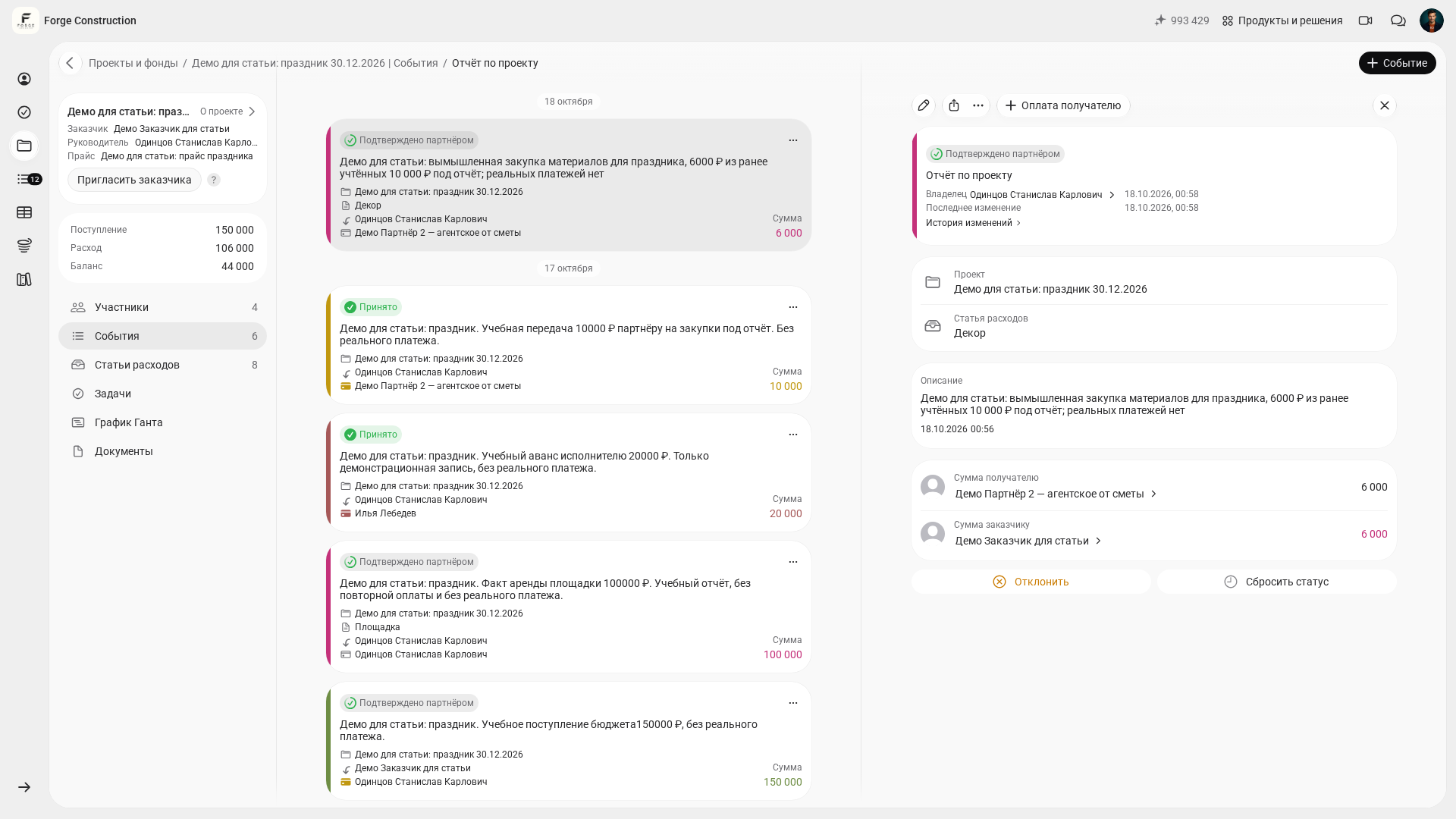
Agree these three rules with your team and follow them at every site:
- Record a purchase on the day it is made, including the amount, category and site.
- Attach the receipt immediately so you do not have to chase it a week later.
- Schedule the manager's approvals 2–3 times a week to prevent a backlog.
For more detail, see the article on expense advances (in Russian).
Method 5. Margin, cash needs and reserves: three constraints
Once the basic accounting is in place, financial management comes up against three constraints. The first is the margin on each site. The second is the cash needed for the operating cycle, taking account of the timing of receipts and payments. Distinguish this from net working capital, which is current assets minus short-term liabilities. The third is a reserve: the company adopts an internal rule against using it for day-to-day payments.
Calculate the margin for each project and compare it with the target level the company intends to maintain. Define the calculation method and the income and costs it includes in advance, and specify whether you are showing an amount or a percentage of revenue. Use the same method across all projects. Margin does not automatically equal net profit. For the terminology, see “What is revenue?” and “Contribution margin”.
You can set an internal rule for reserves, such as setting aside a percentage of receipts and approving its use separately. Any actual transfer of money and its documentation must be confirmed separately. The Company Fund in 101 records internal income and expenses separately from projects. Check whether the section and its features are available under your plan and permissions. Keeping these records separate does not itself execute a bank transfer or impose a restriction that prevents the money from being used.
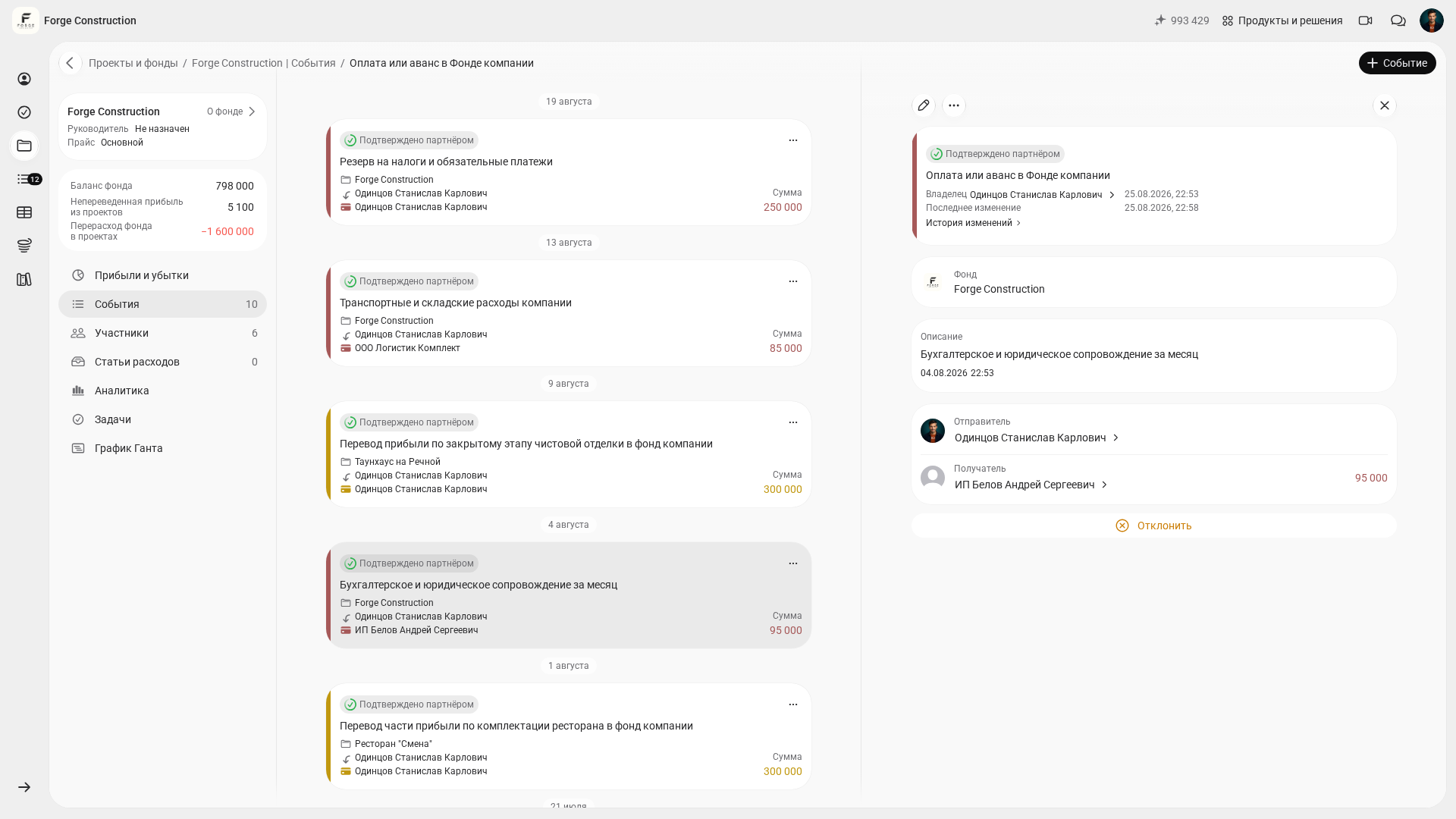
To understand how much operating cash your business needs and where it is tied up, see the article on working capital.
How can you make these methods part of your daily routine?
These five financial management methods work when they become a regular practice. Setting them up once is not enough: figures change every day, and decisions are made every week.
Here is a straightforward schedule that even a busy team can maintain:
- Every day: record purchases and expense advances on the day of the transaction.
- Once a week: update the payment calendar and reconcile the cash flow statement.
- Once a week: compare budget and actuals by category for each active site.
- Once a month: review margins by site and check the reserve.
To take a broader view as a business owner, keep three reports: a cash flow statement, a profit and loss statement and a balance sheet. The 101 blog has a separate article on the three essential reports for business owners.
When financial variances arise, review the project's economics, the timing of receipts and payments, and the completeness of the records. A quick self-audit and the discussion of common problems in the article on management accounting mistakes (in Russian) can help in these situations.